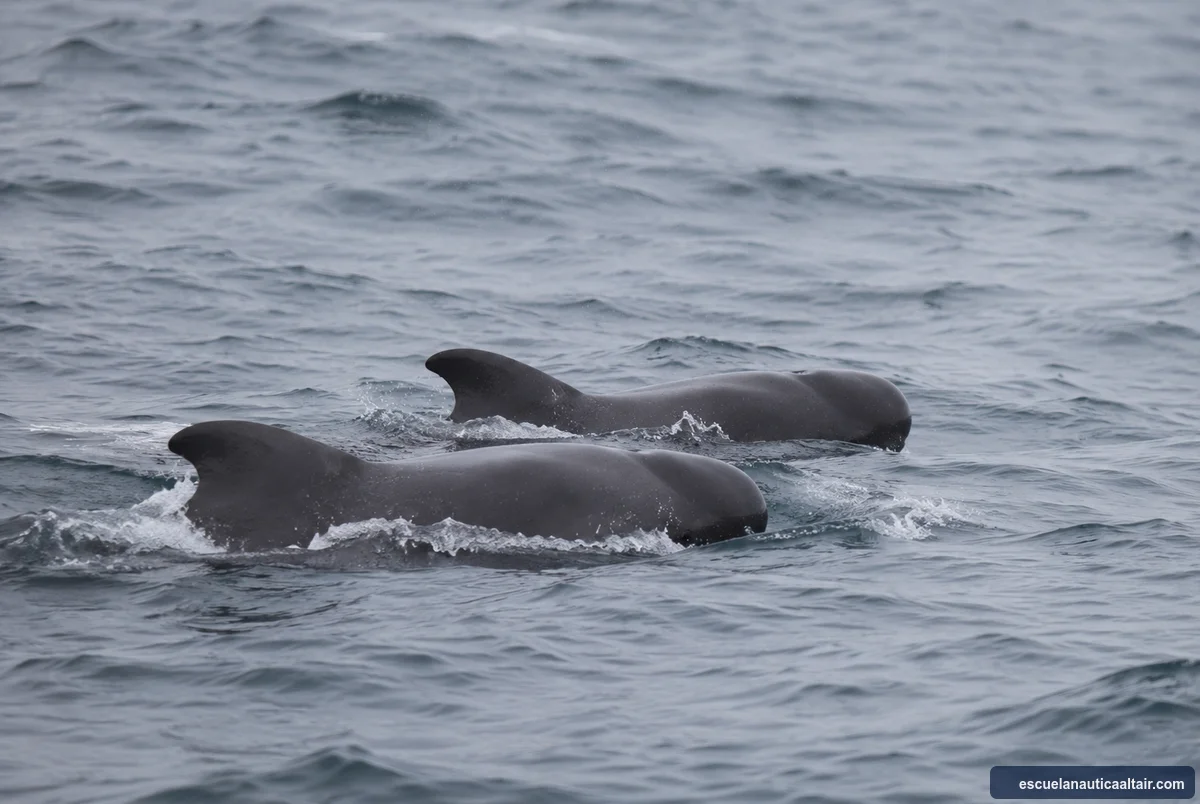
The sea at its purest
“It’s not just seeing them; it’s feeling the silence with the engine off and hearing a fin whale blow just metres from our boat.”
At Altair Náutica we see whale watching as both a responsibility and a privilege. Aboard BELA, our expedition sailing boat, we take you beyond the horizon to discover the hidden life of the Catalan sea. Unhurried, with scientific rigour and with the passion of people who have been sailing these waters off Barcelona and the Garraf for 25 years.
6-7 hour trips
Limited places
Maximum respect, minimum footprint. An experience that changes the way you see the ocean.
Find out moreSailing along the Garraf coast gives you a unique chance to watch marine life in the wild. Thanks to the submarine canyons off the Catalan coast, a migration and feeding area, we can find everything from fast dolphins to the majestic fin whale.
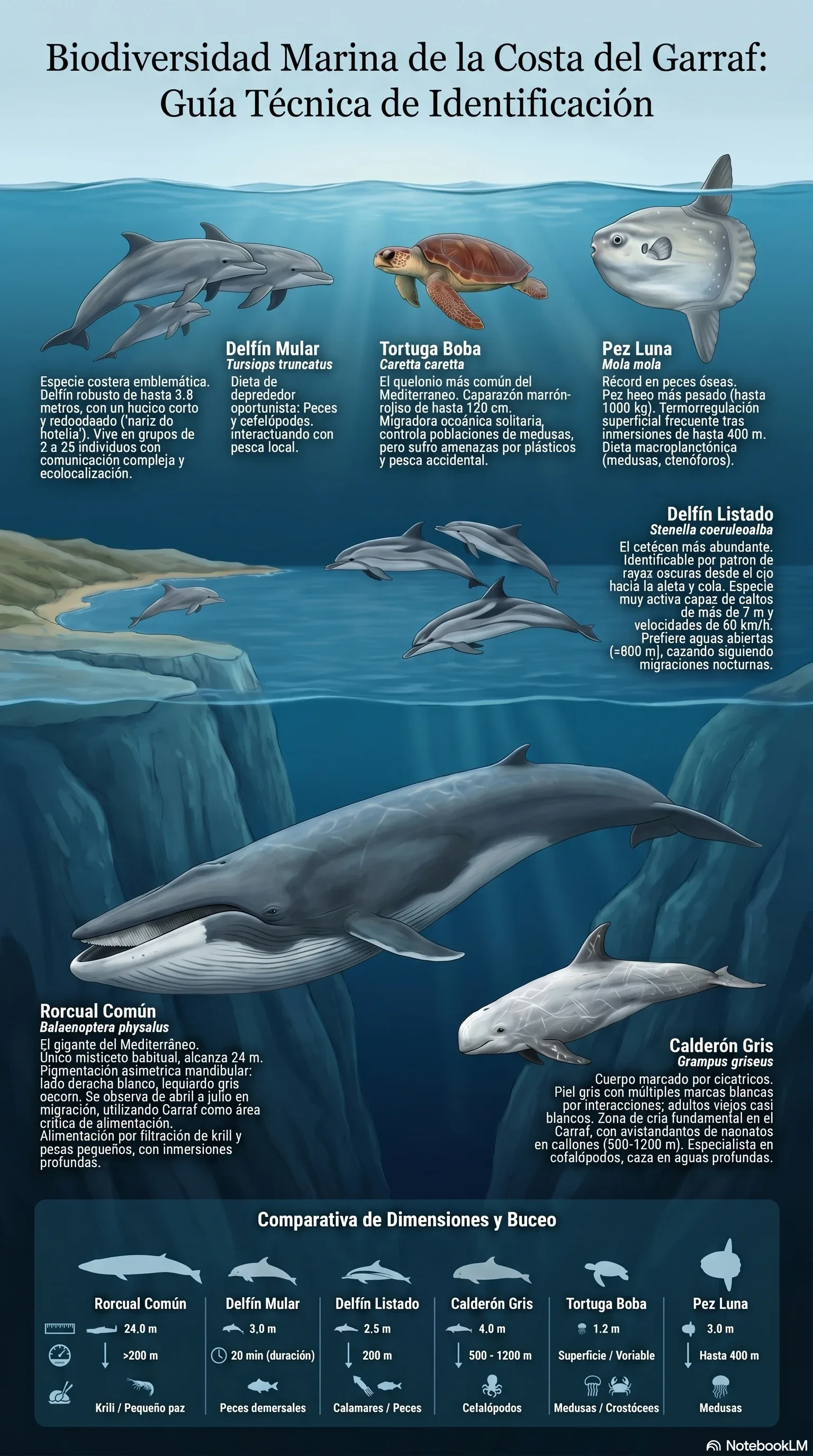
Visual species guide
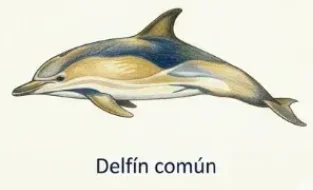
1. Common dolphin (Delphinus delphis)
Adults 1.7-2.5 m · Calves 0.9-1 m
The most frequently sighted in the western Mediterranean. It is identified by its ochre and grey hourglass pattern along the side. It is a sociable animal that forms groups of tens to hundreds of individuals. Its dorsal fin is tall and curved, and its beak is clearly separated from the melon.
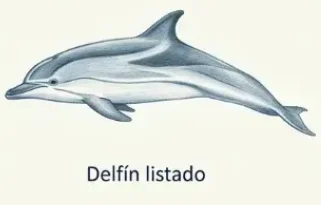
2. Striped dolphin (Stenella coeruleoalba)
Adults 1.8-2.7 m · Calves 0.9-1 m
The most abundant species in the Mediterranean. It has a slender body with a distinctive dark stripe running from the eye to the flipper. It is very acrobatic and often bow-rides. Its belly can be white or pink.
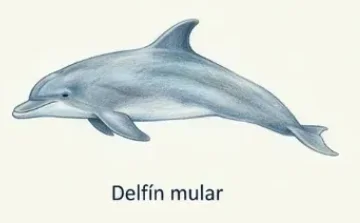
3. Bottlenose dolphin (Tursiops truncatus)
Adults 1.9-4.1 m · Calves 0.85-1.4 m
With a sturdy body and short beak, it is uniformly grey on the back and white underneath. It lives both inshore and offshore and usually travels in groups of 5 to 15. It is very sociable around boats.
4. Sperm whale (Physeter macrocephalus)
Adults 10.5-16.5 m · Calves 3.5-4.5 m
It stands out for its enormous head (a third of its length). It has a single blowhole on the left side and a low dorsal fin followed by ridges. It can dive to more than 2,000 metres and is present all year round in areas such as the Ibiza Channel.
5. Fin whale (Balaenoptera physalus)
Up to 24 m · over 70 t · Endangered
The undisputed star of the Garraf and the second-largest species on the planet. Two features make it unmistakable: the chevron — a pale V behind the head — and the asymmetrical colouring of the jaw, white on the right side and dark on the left. This asymmetry is no evolutionary quirk: the fin whale feeds by rolling onto its right side to engulf shoals of euphausiids (Mediterranean krill) or small pelagic fish in one gulp. In a single lunge it can take in thousands of litres of water, which it then filters through its baleen. In the feeding season it can eat up to 1.8 tonnes of food a day.
Its vertical blow reaches more than 6 metres and can be seen kilometres away. It reaches 37 km/h in bursts — sailors used to call it “the greyhound of the sea”. It can dive to around 470 metres and hold its breath for 20 minutes. It lives up to 90 years, reaches sexual maturity between 6 and 12, and females give birth to a single calf every 2-3 years after almost a year’s gestation. Calves are already 5.5-6.5 metres long at birth.
It visits the Garraf coast from February to June to take advantage of the zooplankton bloom generated by the submarine canyons. This coastal strip is a Site of Community Importance (SCI) and a Special Protection Area for Birds (SPA) within the Natura 2000 network. More than 400 different individuals have been identified in this corridor by photo-identification of the dorsal fin. Even so, the species is still threatened by ship strikes, bycatch, noise pollution and microplastics.
The Garraf corridor in numbers
One of the most studied populations in the western Mediterranean
The strip of sea off the Garraf and Vilanova (1,944 km², the Hope Spot declared by Mission Blue in 2024) is a migration and feeding area for fin whales every spring. Scientific studies in this area now add up to more than a decade of continuous monitoring:
400+
individuals
identified
1.944
km² area
monitored
6. Risso’s dolphin (Grampus griseus)
Adults 2.6-4 m · Calves 1.1-1.7 m
It has a bulbous head with no visible beak. Its body is covered in distinctive white scars from its interactions. It lives in waters deeper than 200 m and feeds mainly on cephalopods.
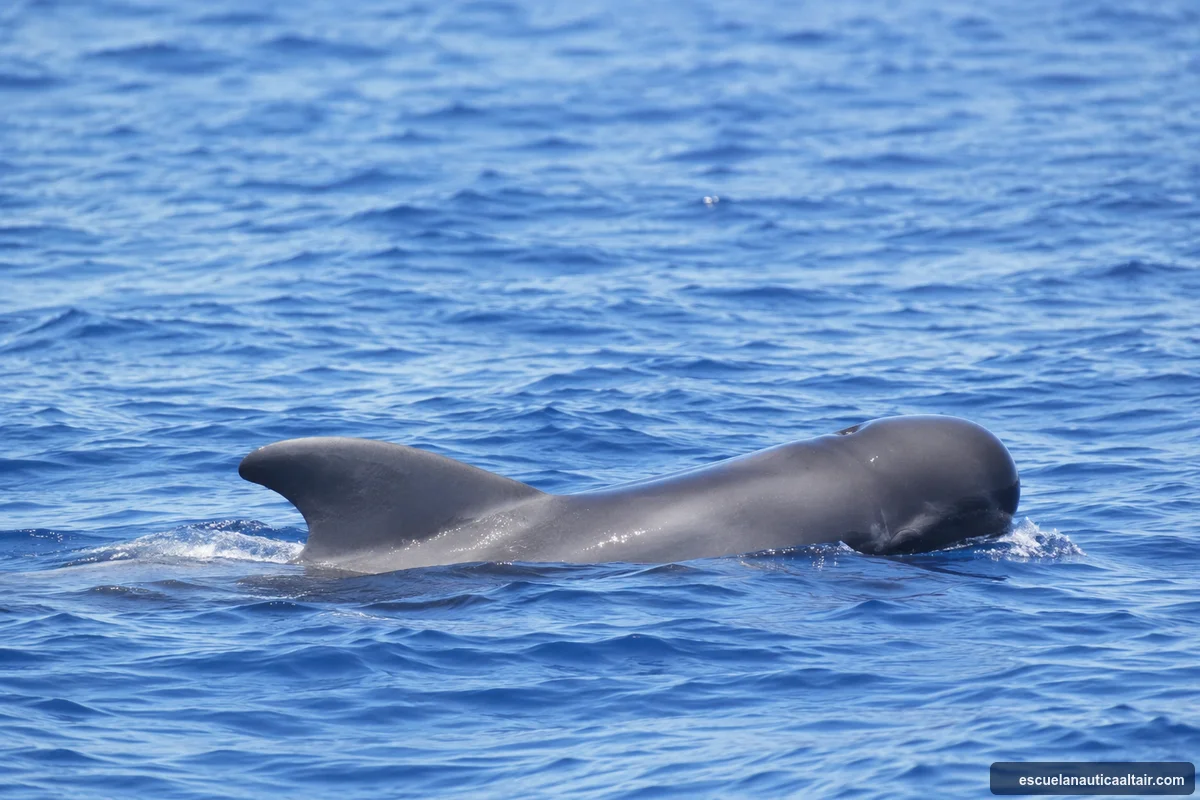
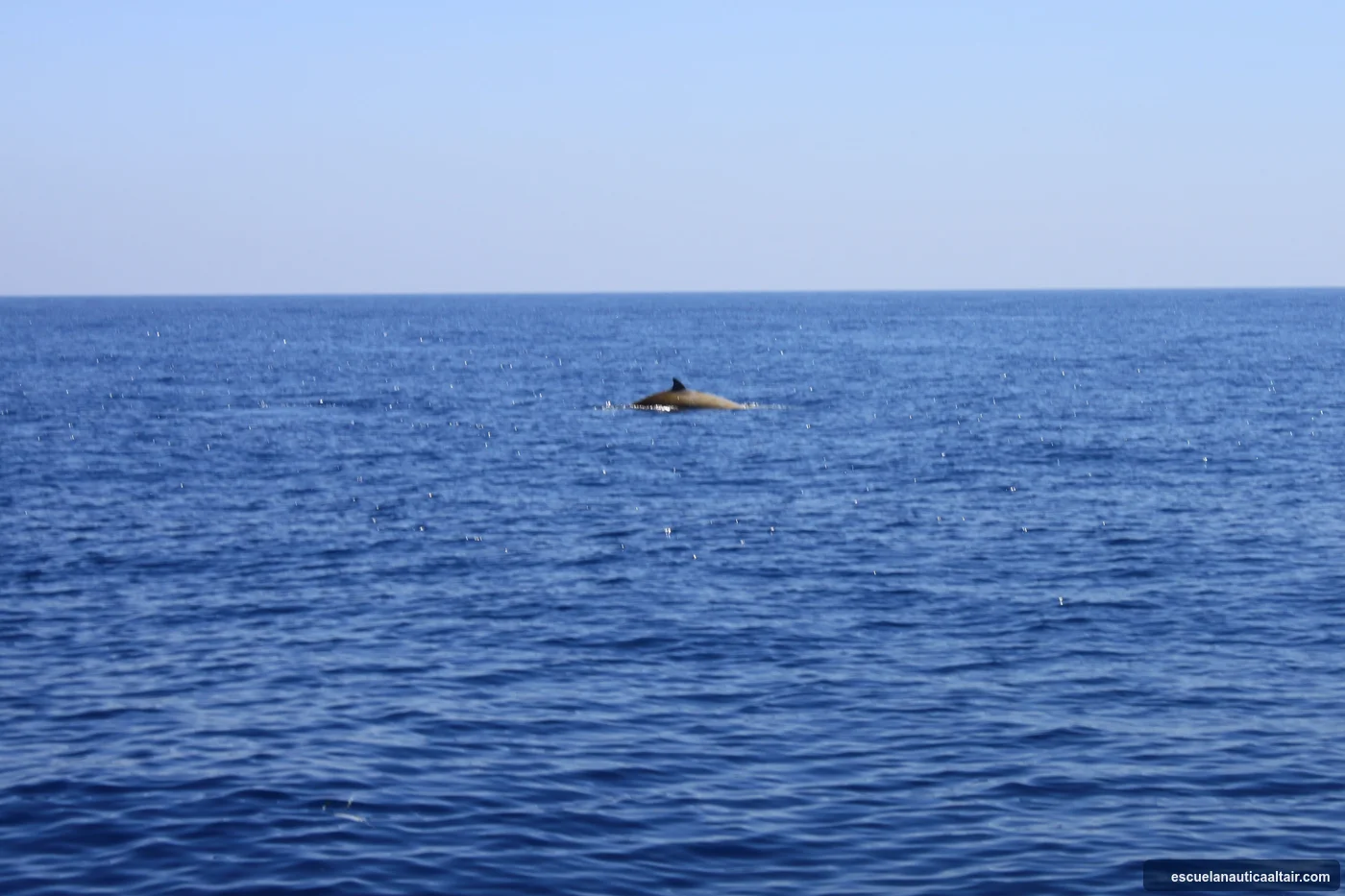
7. Cuvier’s beaked whale (Ziphius cavirostris)
Adults 5.5-7 m · Calves 2.3-2.7 m
Its head and back are paler or white, especially in adult males. It has a small dip above the head and a small dorsal fin set far back. It is the diving champion: it reaches more than 3,000 metres and is very sensitive to sonar.
Beyond whales and dolphins: other Mediterranean gems
The richness of our coast doesn’t end with marine mammals. The Mediterranean is a vibrant ecosystem where fascinating species meet, often giving us unforgettable encounters while sailing on BELA.
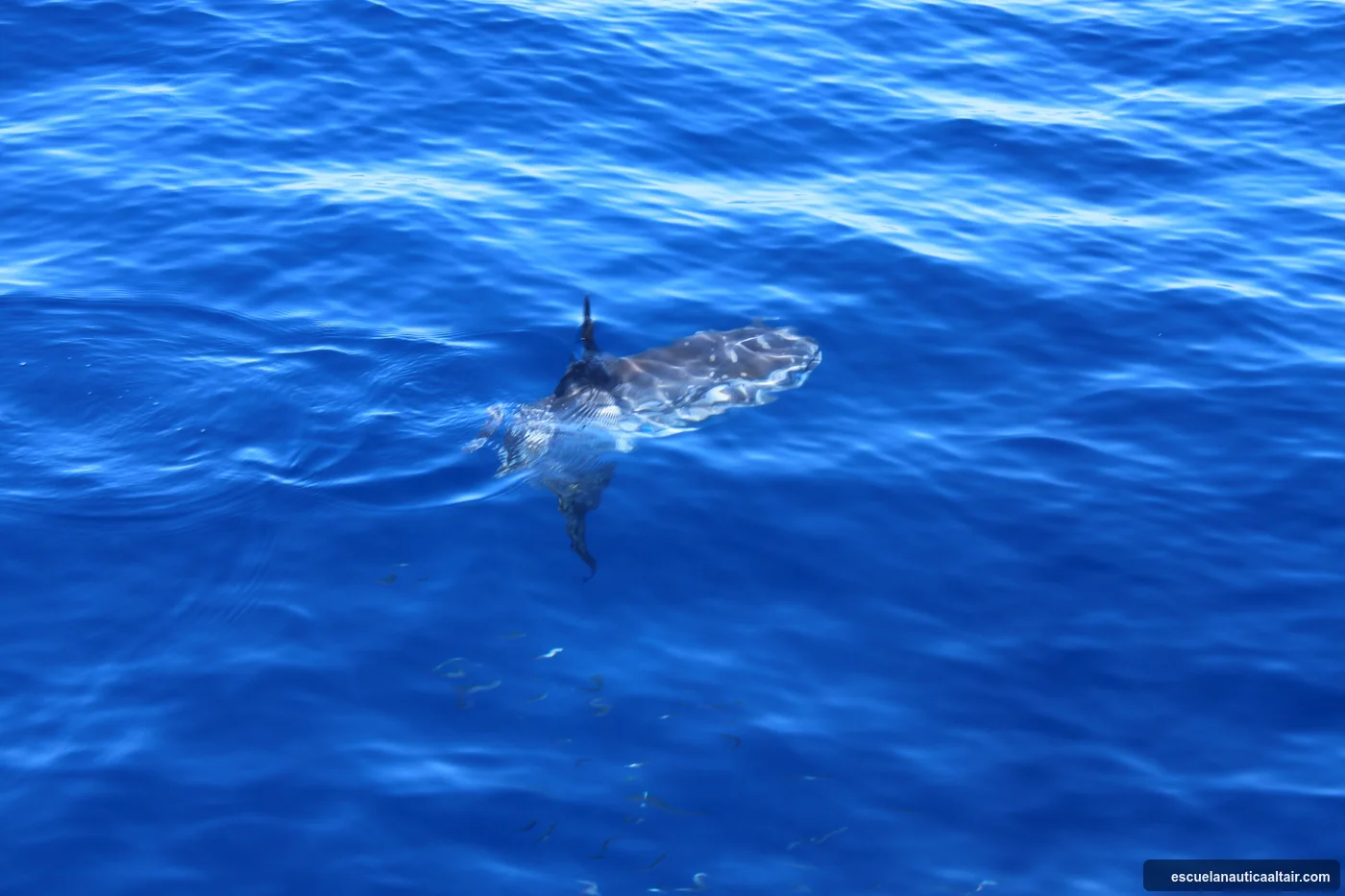
Ocean sunfish (Mola mola)
It is the heaviest bony fish in the world. With its distinctive round shape and no tail fin, it is often seen “sunbathing” at the surface to regulate its temperature and let seabirds pick parasites from its skin. It is a slow but majestic swimmer that can weigh more than 1,000 kg.
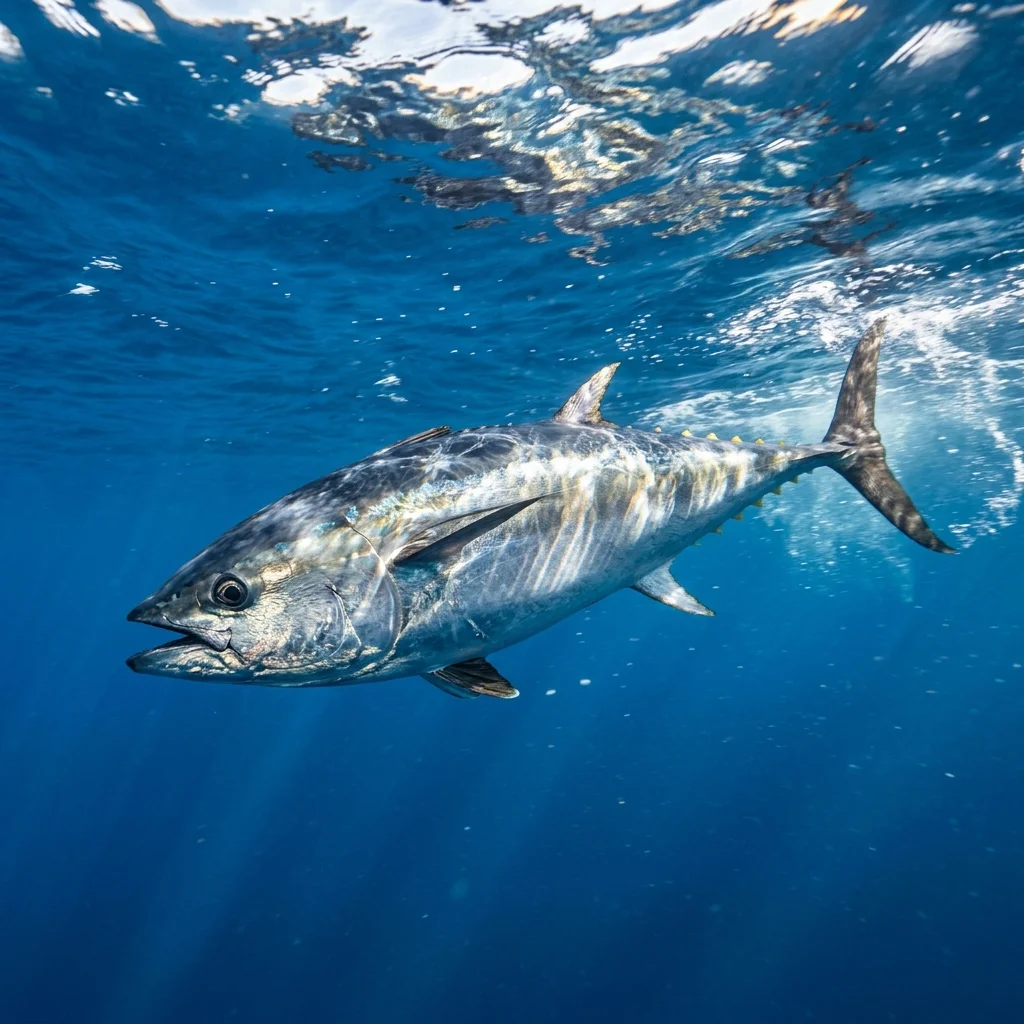
Tuna and bluefin tuna
Watching a school of bluefin tuna (Thunnus thynnus) hunting is pure spectacle. These “Formula 1” predators of the sea can reach incredible speeds. Their leaps and the frenzy at the surface give them away, often with seabirds joining in the feast.
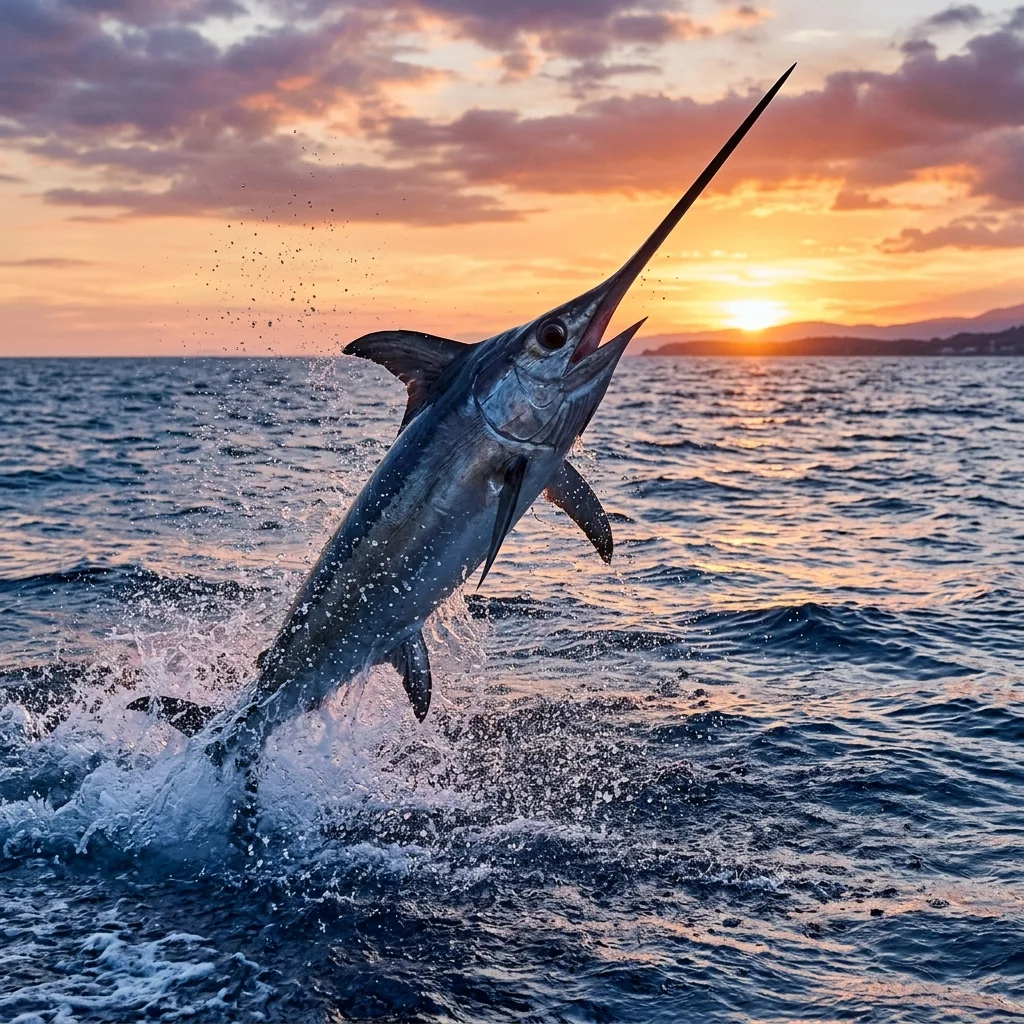
Swordfish (Xiphias gladius)
Although it is mainly a deep-water animal, it can be seen close to the coast during its migrations. Its long silhouette and powerful sword make it unmistakable. It is one of the fastest and most elegant predators in the ocean, capable of spectacular leaps.
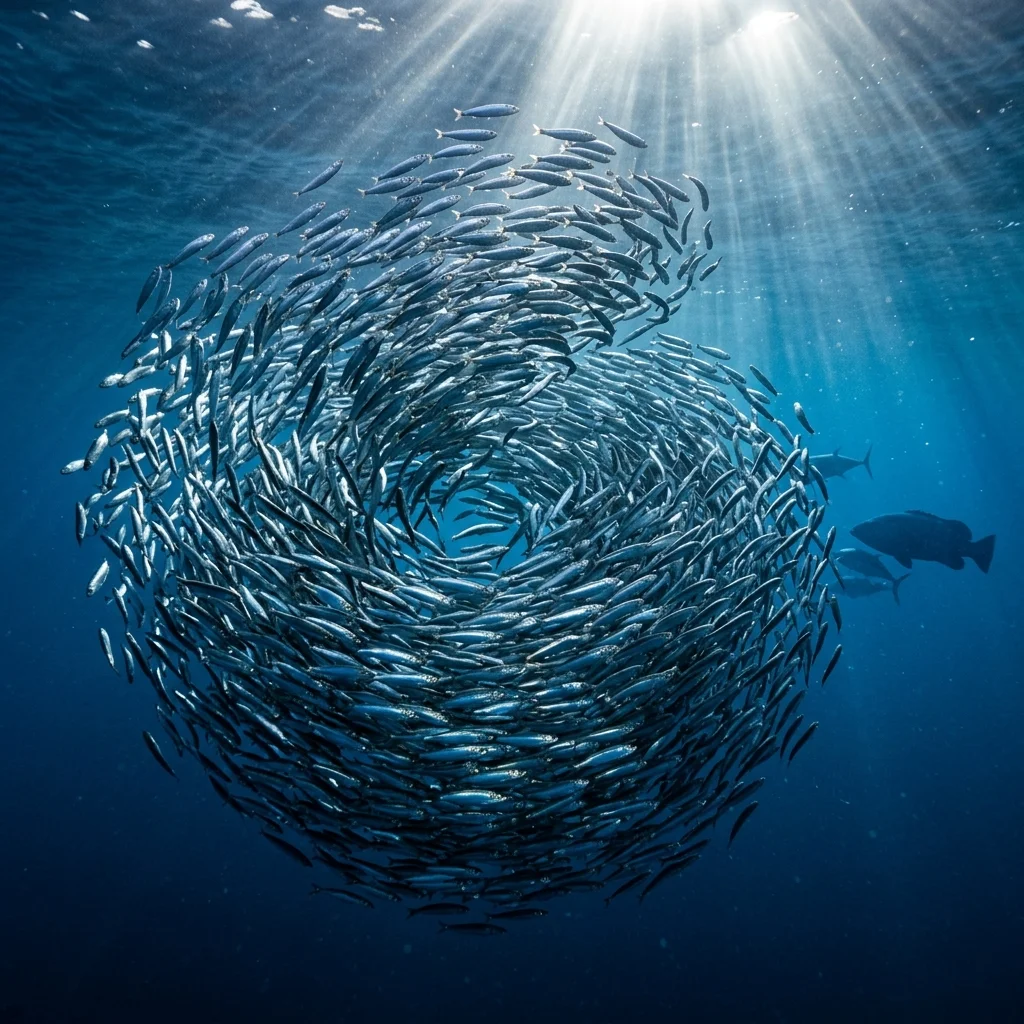
Shoals of sardines and anchovies
The base of the food chain. These huge shoals of small fish form “bait balls” as a defence. They feed dolphins, tuna and birds, creating brief bursts of frantic life out in the blue.
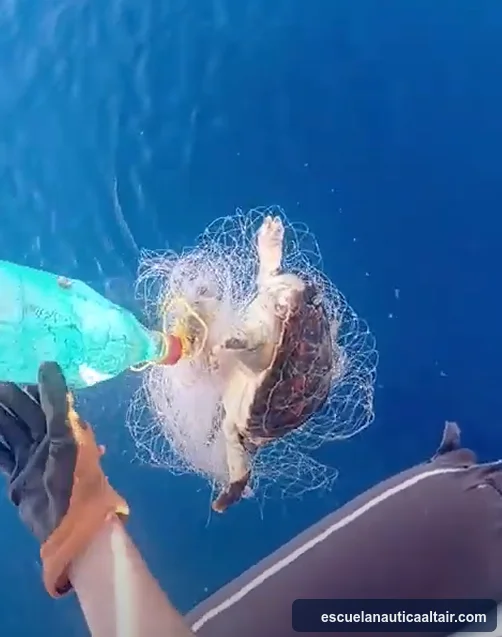
Loggerhead turtle (Caretta caretta)
It is the most common sea turtle on our coast. Crucial to the marine balance, it feeds on jellyfish and crustaceans. It is essential not to disturb them and to call 112 if you see one that is injured or tangled in plastic.
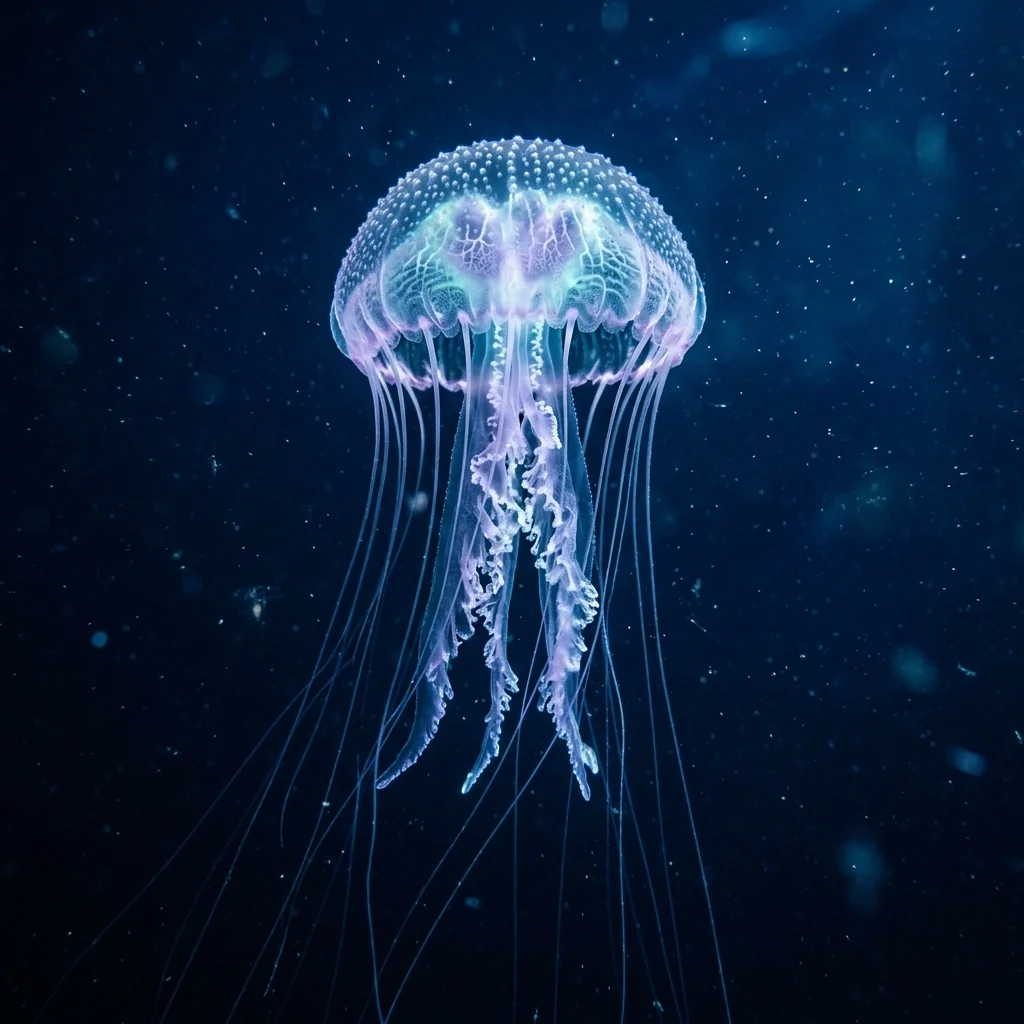
The world of jellyfish: allies in the food chain
Although we often see them as a nuisance when swimming, jellyfish play a key role in the Mediterranean. Not only are they the main food of loggerhead turtles and sunfish, they also shelter the young of many fish that hide among their tentacles.
Ecological importance
- Nutrient recyclers: they keep plankton populations in check and return nutrients to the system when they die and sink.
- Essential prey: protected species such as the sunfish and the loggerhead turtle depend almost entirely on them.
- Biological indicators: when they appear in large numbers they tell us a lot about water temperature and quality.
When is the best time for whale watching?
Spring, from February to June, is the best time for fin whales; dolphins can be seen all year round. Even so, for a successful trip the most important thing is a flat sea: without waves it is much easier to spot blows or fins on the horizon.
Commitment to wildlife
At Altair Náutica we operate with official MITECO authorisation. We keep to the safety distances and never chase the animals. Our aim is respectful, educational observation.
Want to see them in the wild?
Join our 6-7 hour trips aboard BELA, authorised by the Ministry.
See the whale-watching expedition