



Boat survey in Barcelona: independent pre-purchase inspection
Secure your investment with a comprehensive technical audit. I am an industrial technical engineer with over 27 years in the marine sector, and I detect hidden defects before you buy.

Not found a boat yet? We help you choose it and buy it well
What it is
What a boat survey is and why you need one
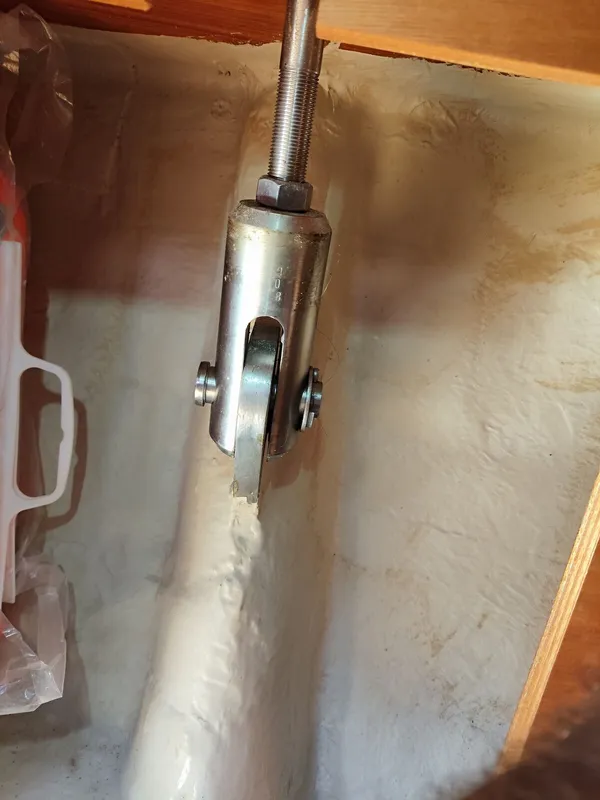
All boats have defects, often not obvious or hidden. The Surveyor works for their client to find and value them. We measure osmosis, inspect the rigging, structure, and systems, use an endoscope camera to look where the eye cannot reach (such as chainplates hidden behind linings or furniture), as well as performing a sea trial to validate if the boat meets your expectations.
Independent appraisal is essential for a guaranteed purchase. The resulting report allows you to save money in the negotiation and provides you with a detailed list of works classified as urgent, necessary, and recommended.
The surveyor works for you. The aim is not to stop you buying the boat, but to make sure you know exactly what you are buying.
What is a Yacht Surveyor?
A Yacht Surveyor is a specialized technician with the experience, knowledge, and qualifications necessary to perform the inspection, valuation, or appraisal of any recreational craft. Internationally, the role of the 'Yacht Surveyor' (or 'expert maritime') is fundamental in the nautical industry; in most European countries, a purchase is not conceived without a prior technical inspection.
What we look for
- Hull osmosisMoisture you cannot see.
- Weakened structureBulkheads, floors and stringers.
- Neglected enginesMaintenance, leaks and wear.
- Unsafe systemsElectrics, gas and plumbing.
Price
How much does a pre-purchase boat survey cost?
The pre-purchase survey is priced by length: up to 12 m, €550 + VAT; 12 to 15 m, €750; 15 to 18 m, €950; 18 to 24 m, €1,300 (+ VAT); over 24 m, on request. It covers hull and osmosis, structure and rigging, the electrical installation and a sea trial, with a written report that ranks the work as urgent, necessary and recommended. Travel is charged at €0.40 per kilometre from Port Garraf, plus allowances outside the area. There is also a remote inspection from €190 + VAT, anywhere in the world: it is not the same as an on-site survey, but it costs less because the surveyor does not travel.
Is the boat a long way away? See the remote inspection service
On-site survey
On board, with haul-out and sea trial. Written report included.
- Up to 12 m
- €550 + VAT
- 12 to 15 m
- €750 + VAT
- 15 to 18 m
- €950 + VAT
- 18 to 24 m
- €1,300 + VAT
- Over 24 m
- On request
* Prices exclude VAT. Travel at €0.40 per kilometre from Port Garraf, plus allowances outside the area; if a flight is needed, flight, taxi, hotel and allowances. Haul-out is not included.
Tell us which boat it is and where; we will reply with a no-obligation quote.
What we check
What do we check in a pre-purchase survey?
Stem to stern, on sailboats, motorboats and yachts. Each survey is adapted to the type of boat, its age and how you plan to use it.
Hull and structure
- –Hull and underwater body
- –Moisture readings: osmosis and hidden repairs
- –Keel, rudder and through-hulls
- –Deck and internal structure
Engine and drive
- –Engine and cooling
- –Transmission, propeller and shafts
- –Leaks, vibration and noise
- –Sea trial under real load
Electrics and electronics
- –Panel, wiring and batteries
- –Charging and protection
- –Navigation and communications
- –Bilge pumps and plumbing
Safety and regulations
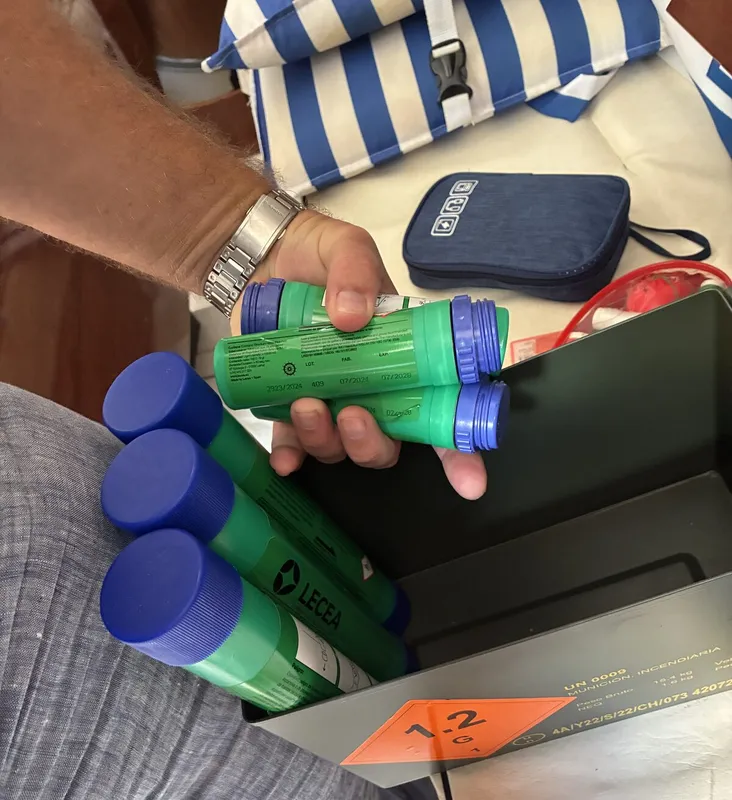
- –Mandatory gear and flares
- –Extinguishers, liferaft and lifejackets
- –Anchor line
- –Paperwork and safety inspection
Rig and deck
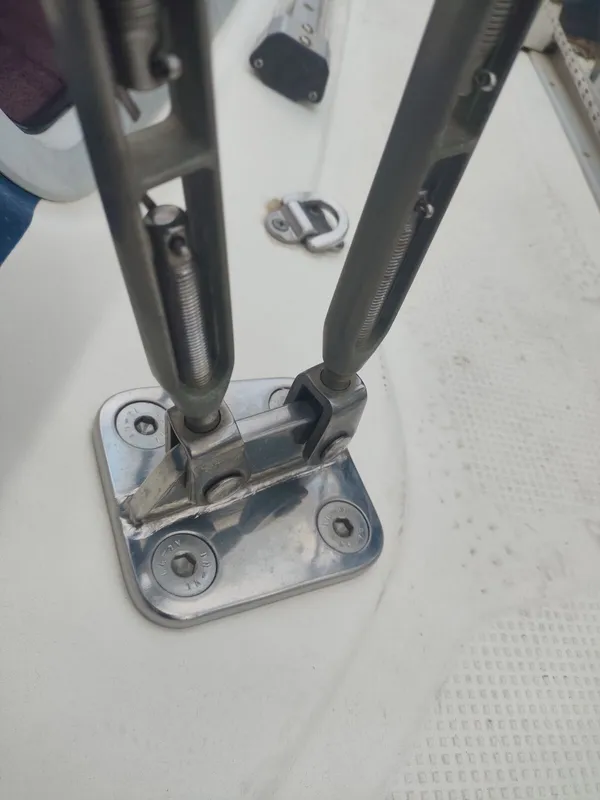
- –Mast, rigging and terminals
- –Sails and deck gear
- –Stanchions and lifelines
- –Hatches and portlights
Interior and equipment
- –Steering and handling
- –Interior and joinery
- –Galley and gas
- –Comfort equipment
The report
A clear report to decide and negotiate
After the survey you get a written report with photos, easy to read, with the real condition of the boat and every defect ranked by urgency.
What it includes
- Critical and non-critical defects, with photos.
- Work ranked as urgent, necessary and recommended.
- Indicative cost of the main repairs.
What it is for
- Deciding whether to go ahead with the purchase.
- Renegotiating the price with objective arguments.
- Having a technical roadmap for your boat.
Portfolio
Surveys we have done
Real cases from this year, taken from our reports, with no names or registrations. Tap one to see what we found, how we helped and the photos.
 October 2026 · Maresme and Barcelonès (El Masnou and Badalona)
Bavaria 31 Cruiser sailboat, 9.5 m, 2008
Buy, negotiating the repairs€800 saved for the buyer
Bavaria 31 Cruiser sailboat, 9.5 m, 2008
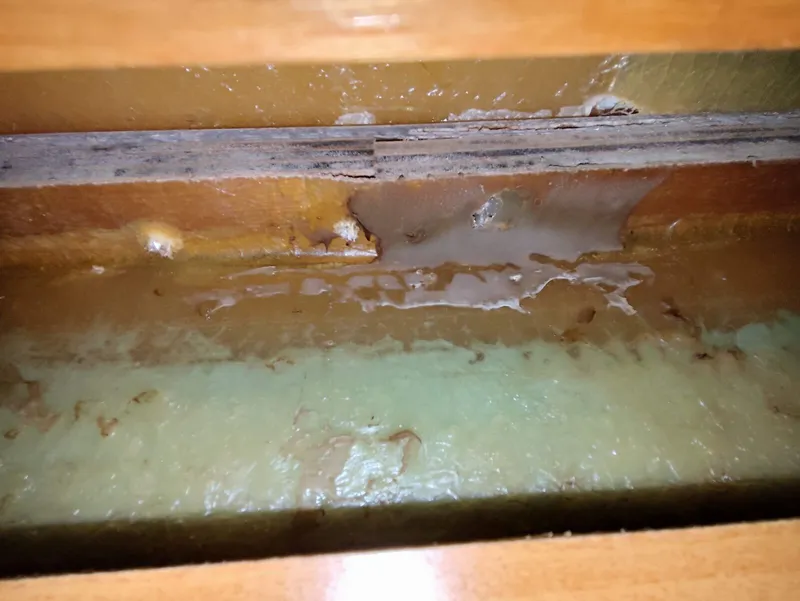
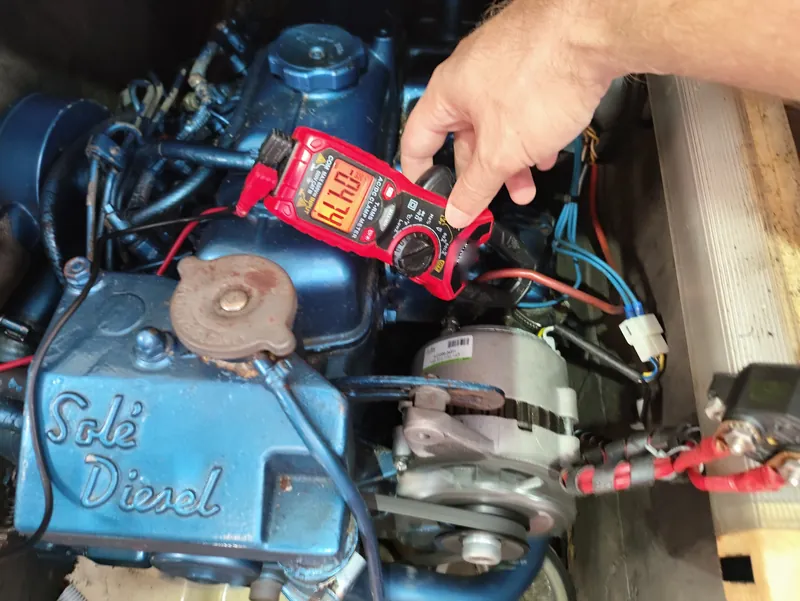
In gear the engine would not exceed 2,200 rpm, yet it reached 3,000 in neutral. Laminate moisture of 8-20 over most of the hull, a sound saildrive and 13.0 V at the batteries: a good boat with an engine to check.
Inspection: Afloat, sea trial and haul-out · pre-purchase survey
What we found
- •Full-throttle engine test: 2,200 rpm and about 4 knots in gear, 3,000 rpm in neutral. Its full-load range is 2,800-3,200 rpm. The hull and propeller were somewhat fouled, but that does not explain such a gap; the most likely cause is the exhaust elbow, original from 2008 and clogged inside.
- •Laminate moisture at 30 points below the waterline, with the hull just out of the water: 8 to 20 over most of the hull, 27-29 on the starboard quarter and 40.4 next to the stern. The reading must be repeated with a dry hull. A single osmosis blister, about 2 cm across.
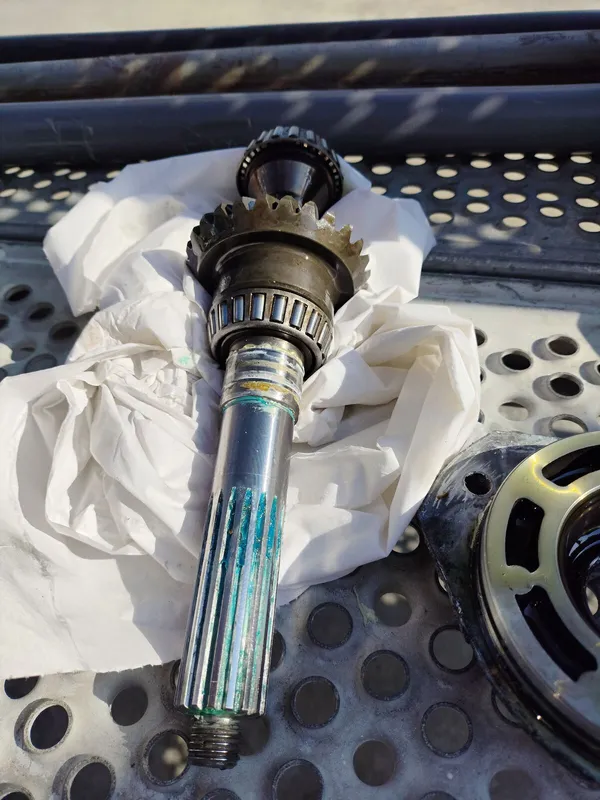
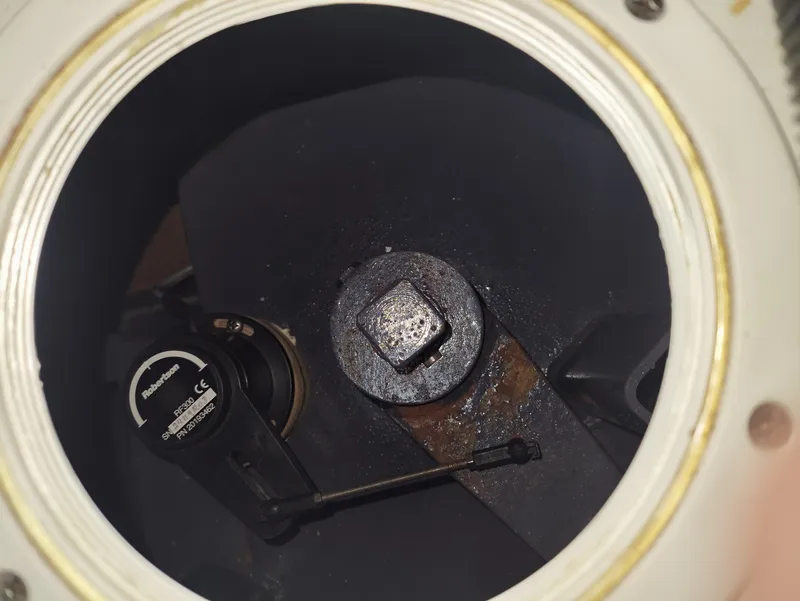
- •Saildrive dismantled on the hard: bearings and gears fine, clean oil with no water and no corrosion. The mechanic will replace the oil seal and O-ring. The rubber diaphragm has never been changed (recommended maximum, 6 years).
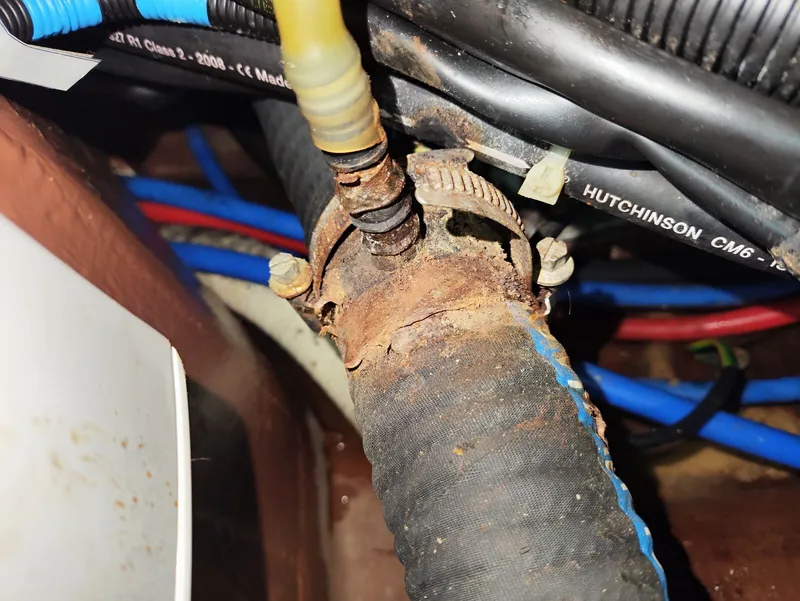
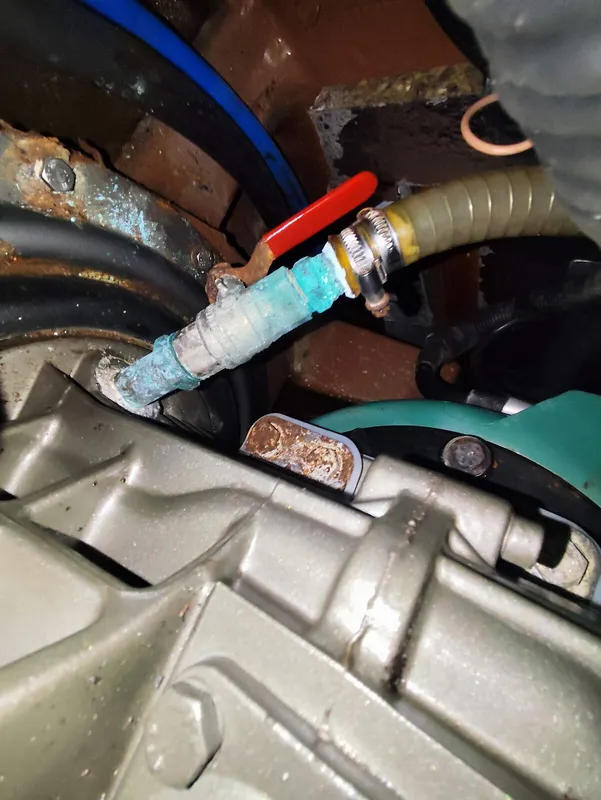
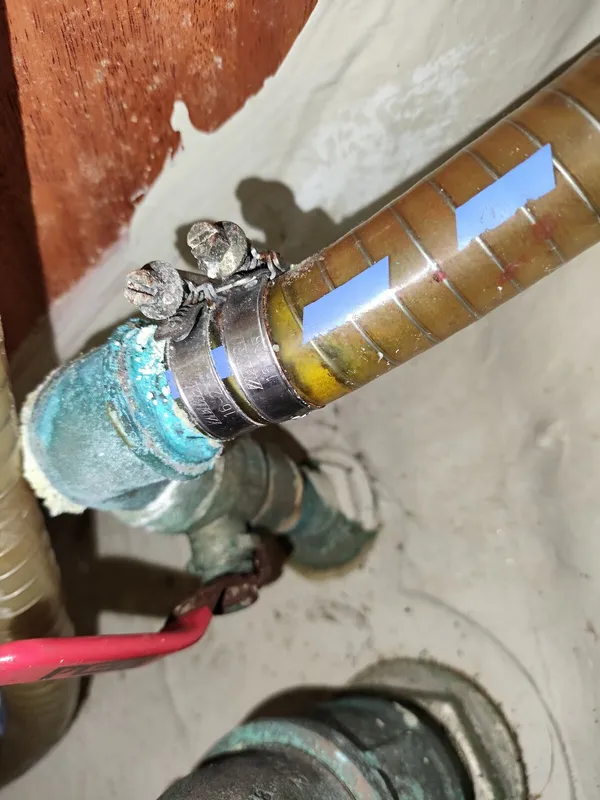
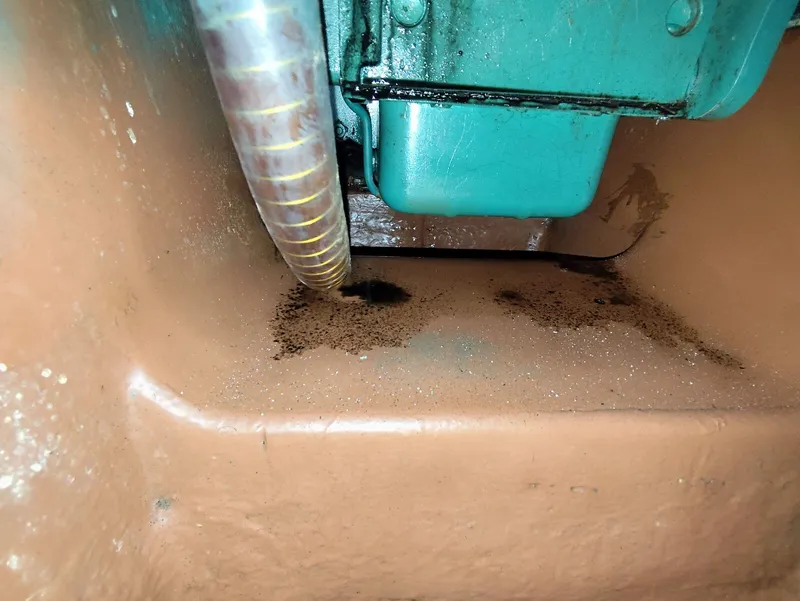
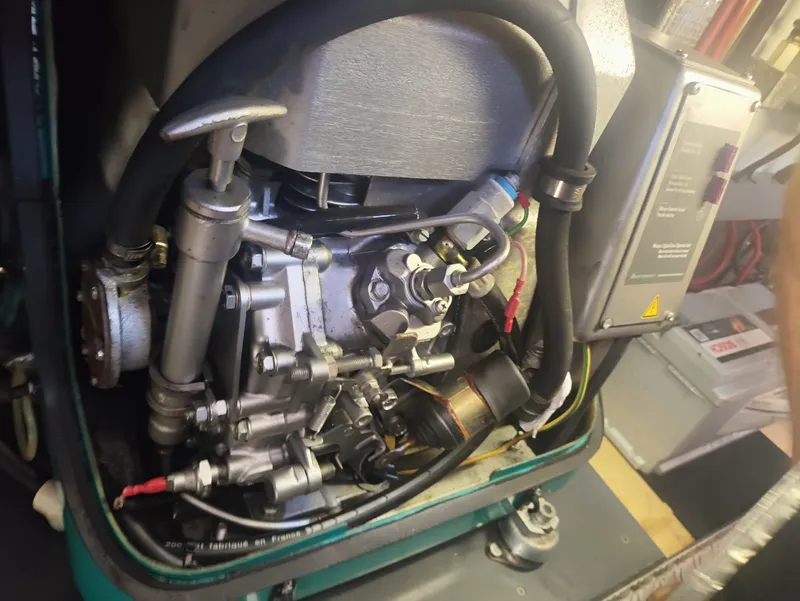
- •Rust and oil loss at the engine: the gasket above the sump is black and wet and the drip tray filled up again soon after being cleaned; the exhaust return hose and the engine seacock have badly rusted clamps and screws, and the silentblocks and their bases could break. All of it needs replacing.
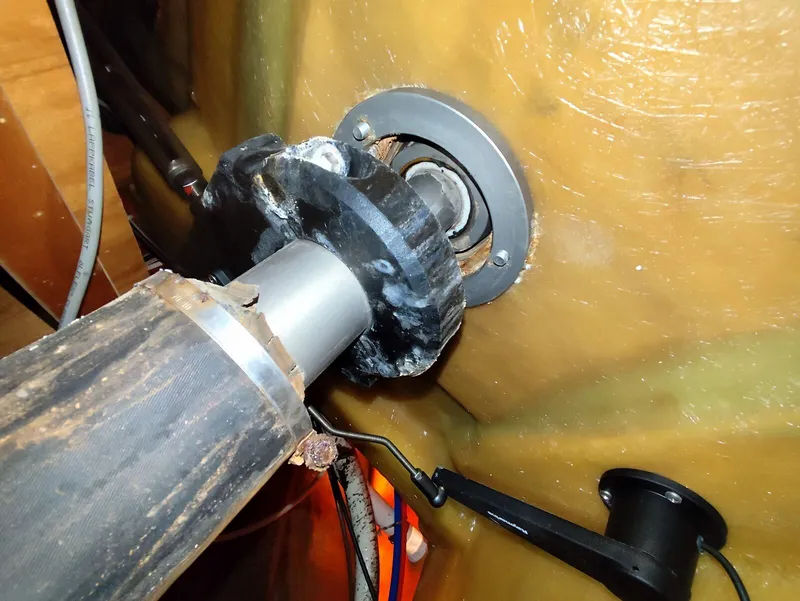
- •Rudder, urgent: the clamps on the rubber boot of the rudder stock, which keep the rudder tube watertight, have completely rusted screws and the rubber is cracked. Replacing them with stainless clamps costs about €100.
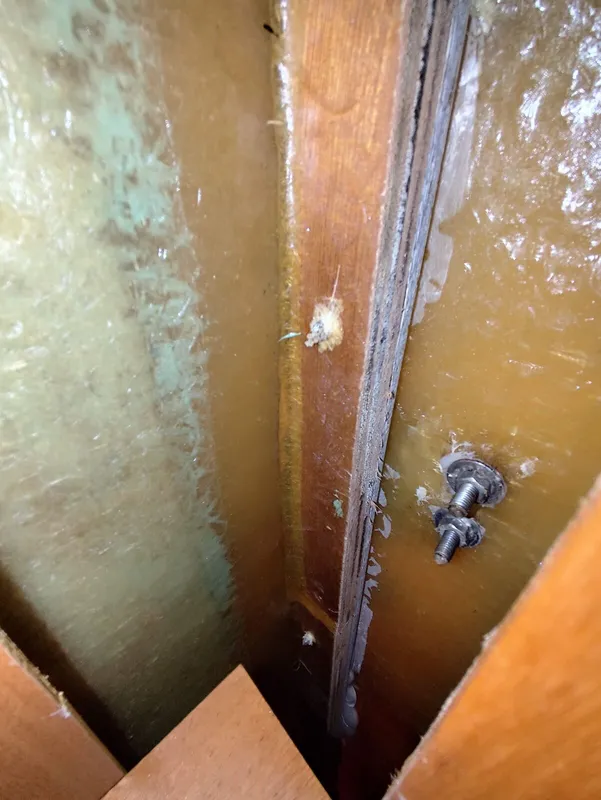
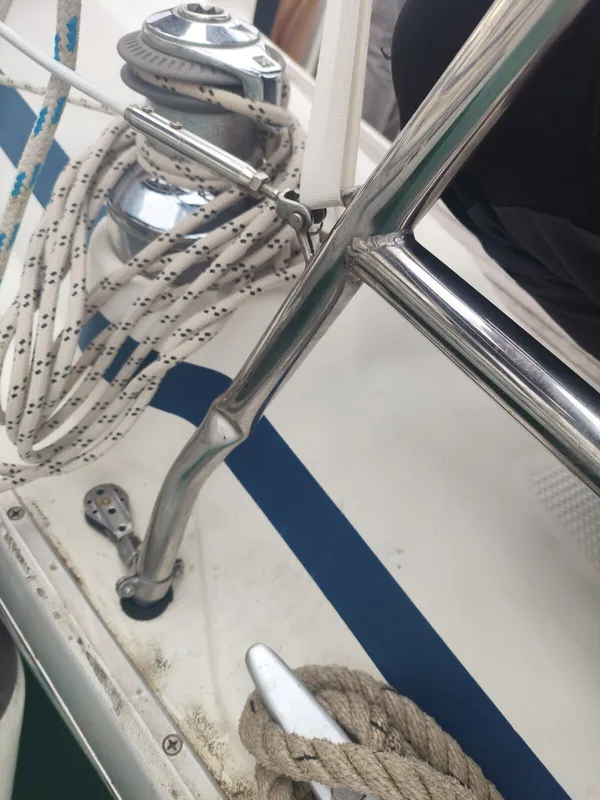
- •Structure: the hull-to-deck joint and the chainplate bases, laminated into the fibreglass, are sound. The stanchions move, with loose base bolts and cracks in the gelcoat: they must be tightened and sealed (from €400). On the cast-iron keel the epoxy has flaked off: sand and recoat it in 3 or 4 years, about €800.
How we helped the buyer
- A report with photos and videos of every finding and the recommendations ranked by urgency, with indicative prices.
- A clear recommendation: buy it, but ask the seller to cover part of the repairs. In the end he paid half.
- One check before signing: the engine must reach at least 2,800 rpm in gear.
Photos from the report



 October 2026 · Barcelonès (Barcelona)
9.5 m cruising sailboat, 1980
Keep the boat, doing the essentialsMinimum plan from €4,130
9.5 m cruising sailboat, 1980
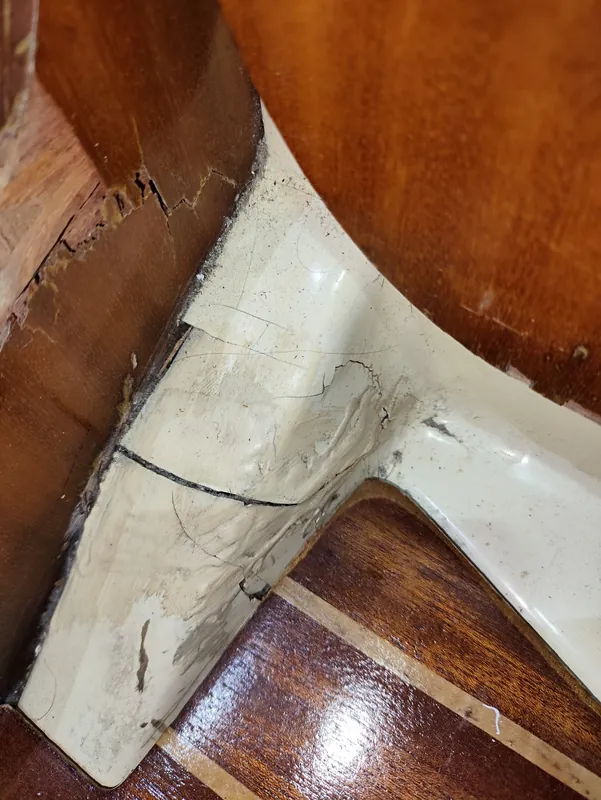
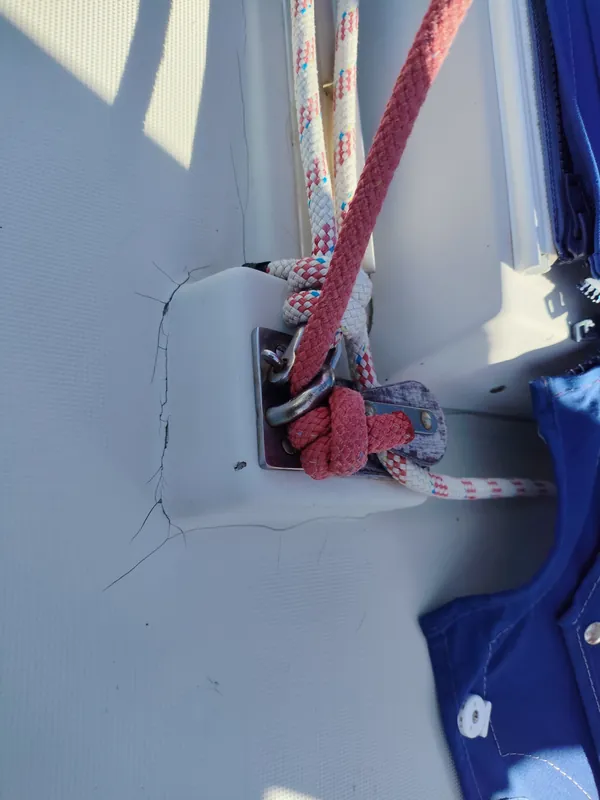
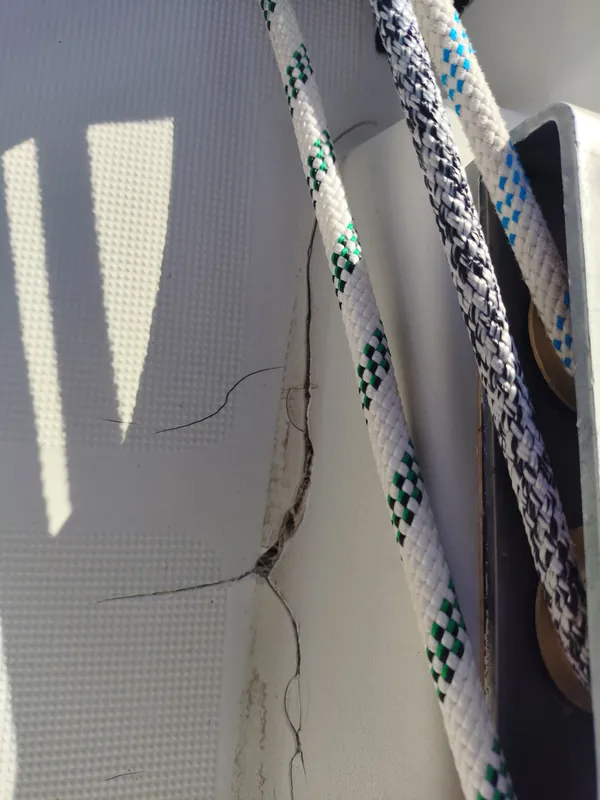
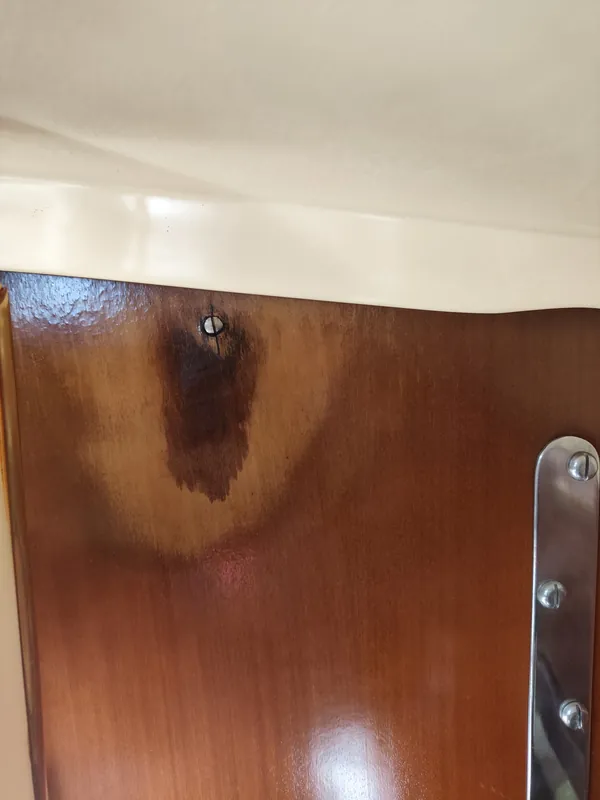
Moisture meter at 0.5 to 6 on open deck and 18 to 45 beside cracks and fittings: water gets in at specific points. The alternator charges well (14.1 V, 28.3 A), but there are through-hulls about to fail and a broken mast bulkhead.
Inspection: Afloat · condition survey for the owner (1st of 2 visits)
What we found
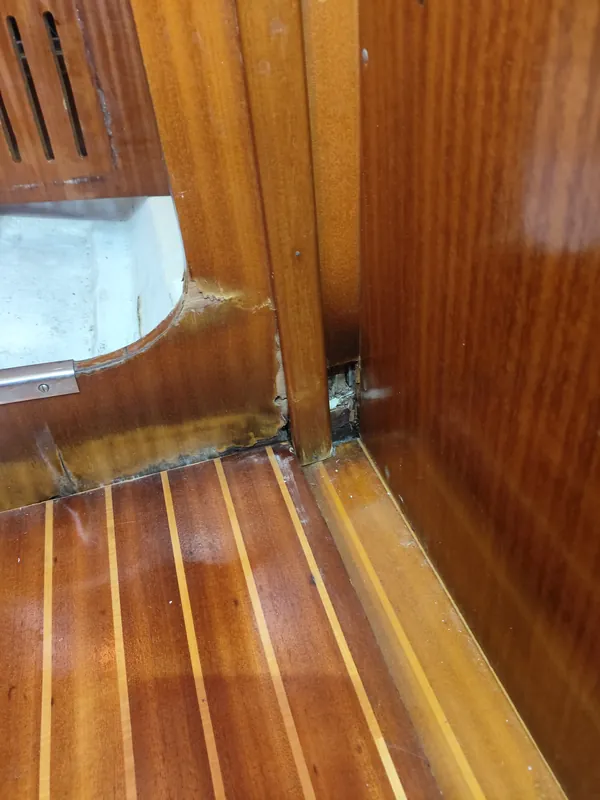
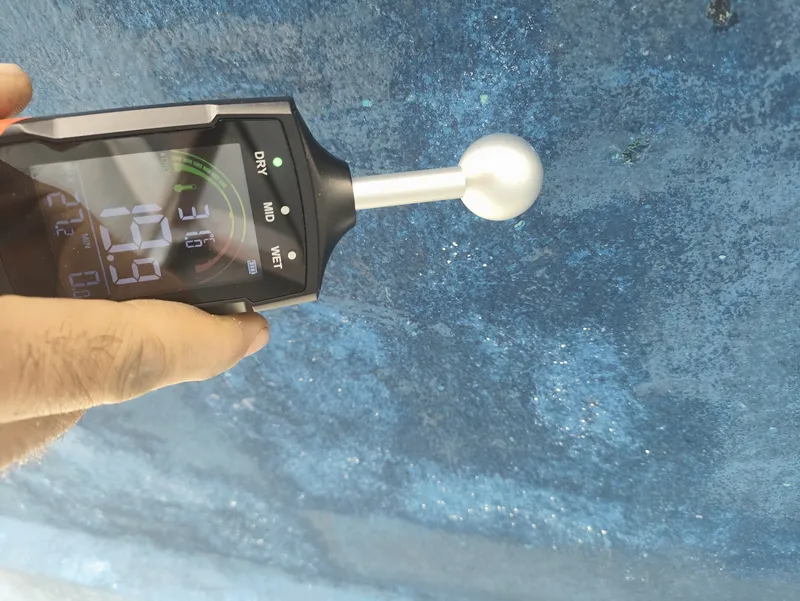
- •Deck moisture meter: 0.5-6.3 on open areas (dry) and 18 to 45 beside port lights, hinges, cleats and the coachroof joint. The highest reading (44.6) sits next to a broken seal. The moisture is localised, not widespread.
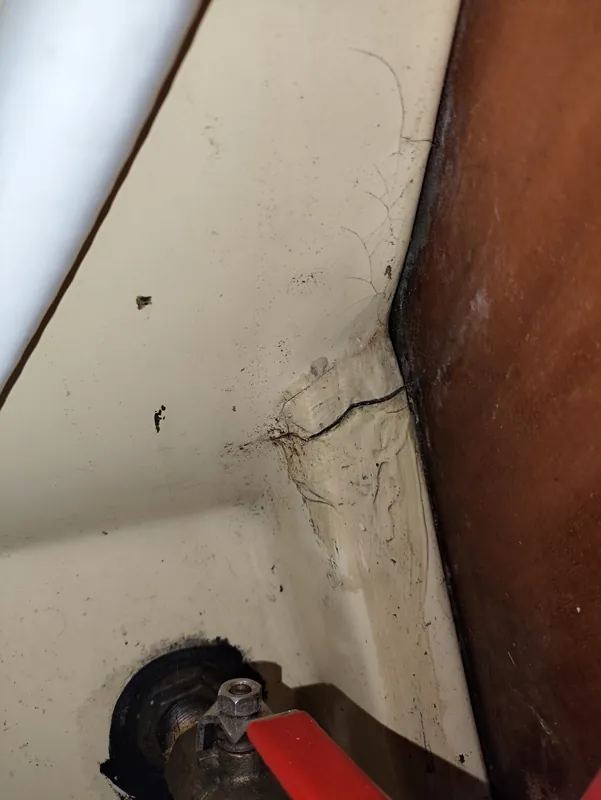
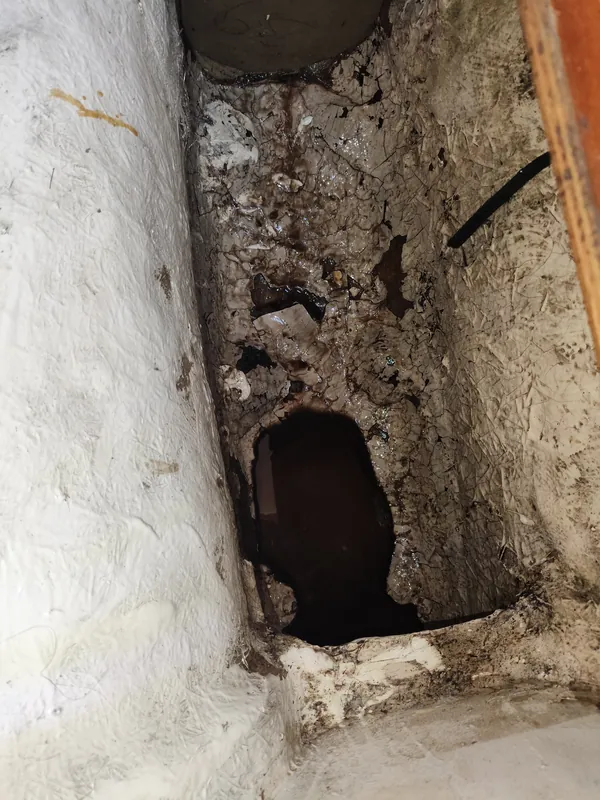
- •Mast step repaired after the mast sank, with a steel plate to spread the load. The bulkheads below are broken, with rotten bases and cracks running through the tabbing that joins them to the hull.
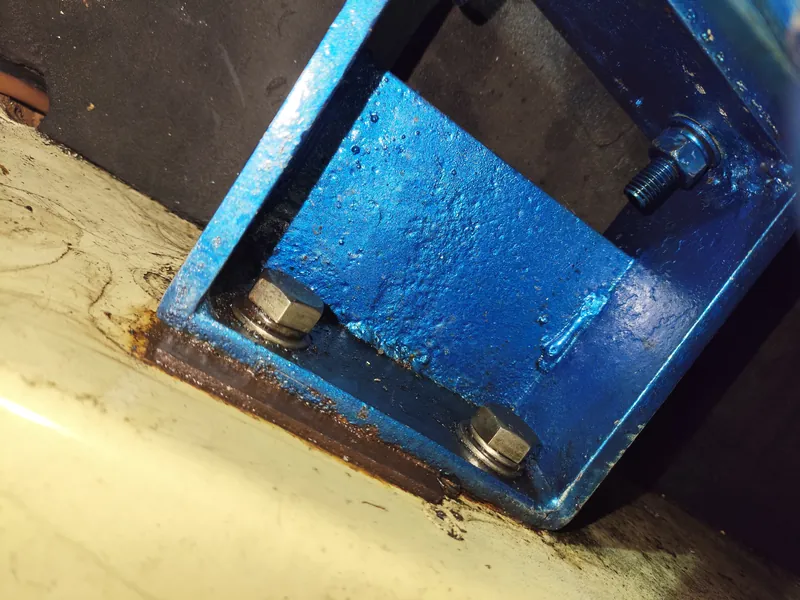
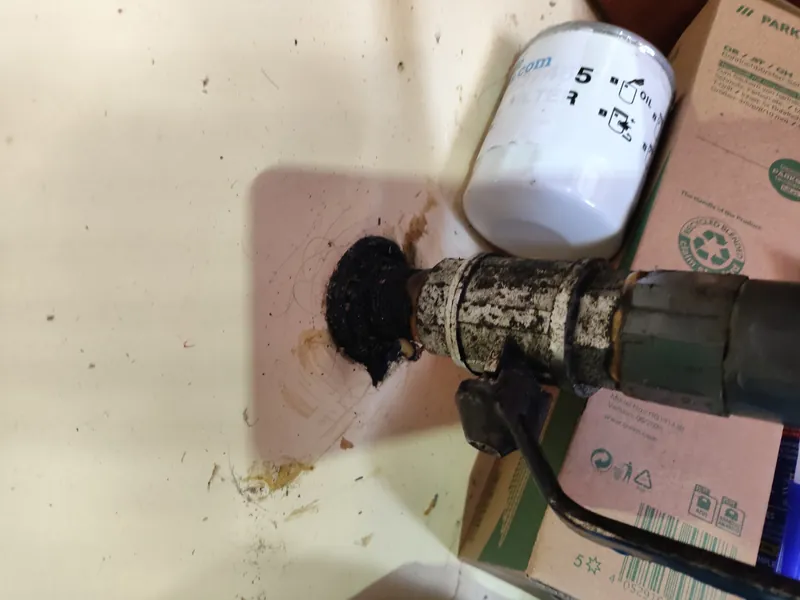
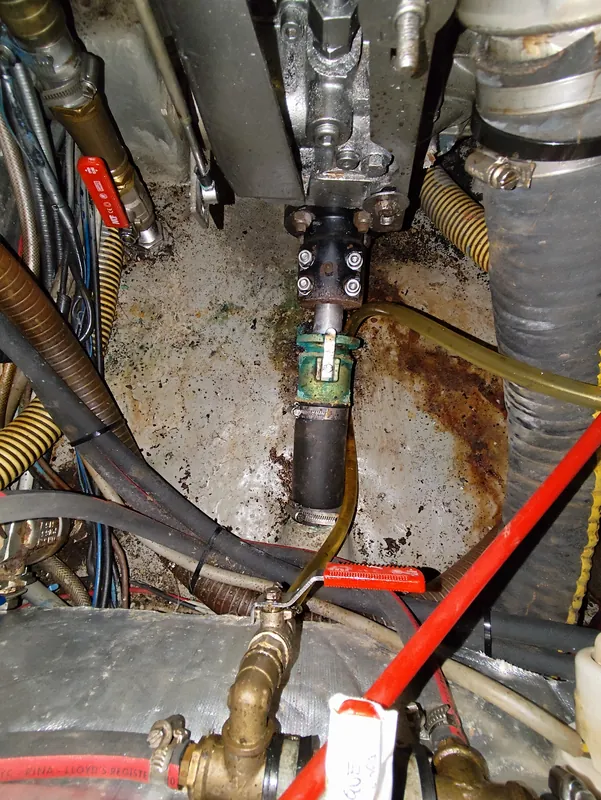
- •Engine and bilge: the steel engine-bed brackets are heavily corroded at the base and bolts, and there is water and oil under the gearbox with the leak not yet traced. The diesel tank was repaired with fibreglass after a leak and there is a lot of diesel in the bilge. The mounts and shaft vibrate very little.
- •Start-up and charging: black smoke with carbon on start-up, normal once warm. Alternator output of 14.1 V and 28.3 A. The engine has no temperature or oil-pressure sensor. Three engine batteries dead in a short time from disconnecting the battery with the engine running.
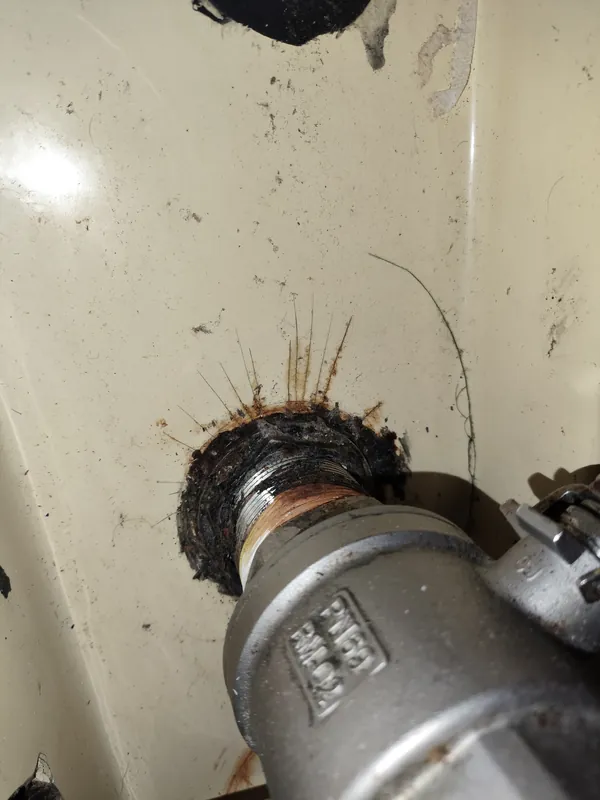
- •Through-hulls with black crust and radial gelcoat cracks: a knock can break them and open a flooding path. This is the most urgent item in the report.
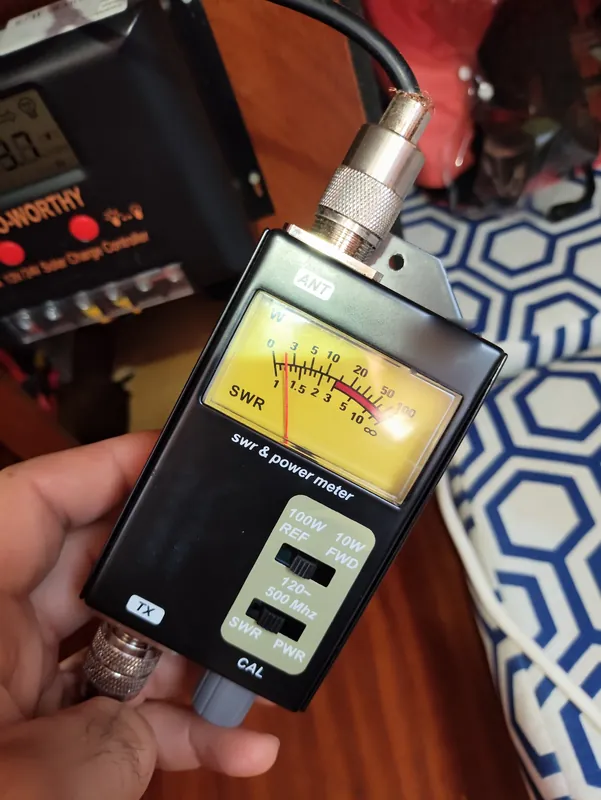
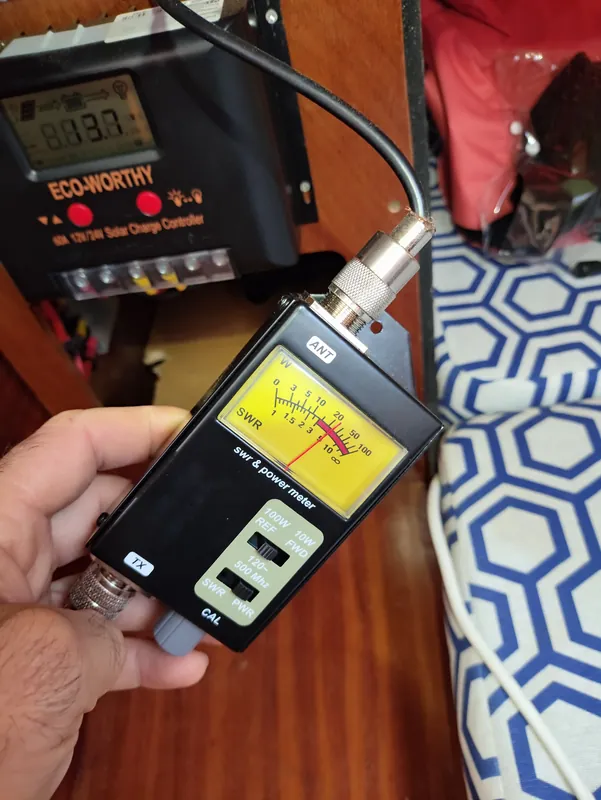
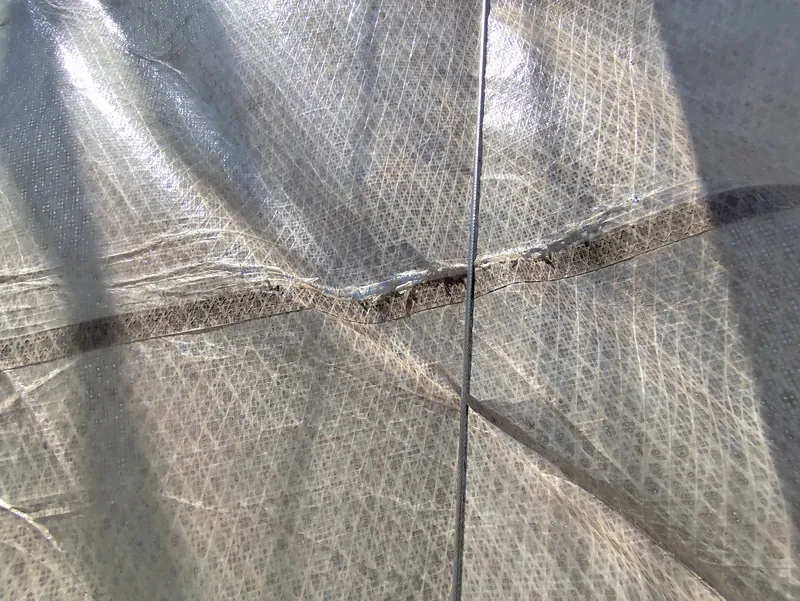
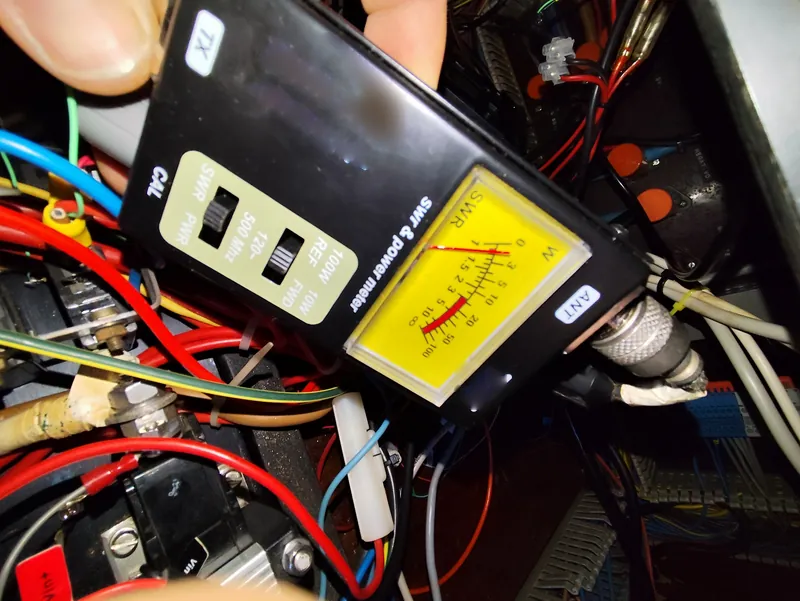
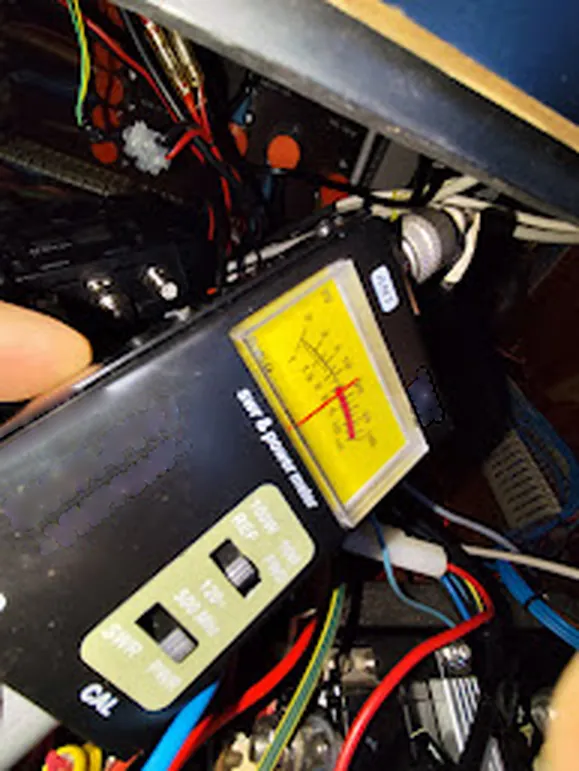
- •Sails and VHF: the genoa is delaminated, cracked and torn in several places. The SWR meter reads 2 on the VHF antenna, at the limit of what is acceptable (normal is under 1.5): part of the power does not leave through the antenna.
How we helped the buyer
- 26 recommendations ranked by urgency, each with an indicative price and the finding it refers to.
- A technical explanation, backed by the manufacturers’ instructions, of why the battery must never be switched off with the engine running.
- A realistic plan: do what is needed to keep the boat safe, no big upgrades, and change boats in 4 or 5 years.
Photos from the report
 July 2026 · Costa Daurada (Tarragona)
Italian 62 ft (19 m) motor yacht, 2004
Buy, negotiating the price~€17,500 of costed work
Italian 62 ft (19 m) motor yacht, 2004
Moisture meter at 18-25 over the blisters and 13-14 elsewhere on the hull (dry reference: 10): active but shallow osmosis, with a sound laminate under the tap test. The only urgent item is a corroded windlass relay.
Inspection: Hauled out · report in English for a foreign buyer
What we found
- •Capacitance moisture meter (relative 0-100 scale): 10 on the topsides as the dry reference, 13-14 on the underwater hull away from blisters, and 18, 19, 20, 20, 24 and 25 over blisters and craters. Above 30 would mean saturation; here moisture is mild-to-moderate and localised.
- •Underwater hull: blisters about 2 cm across with vinegar-smelling fluid (acetic acid) when pierced, a sign of active osmosis, plus over 30 craters from old blisters. A hammer tap test over the whole hull finds no delamination.
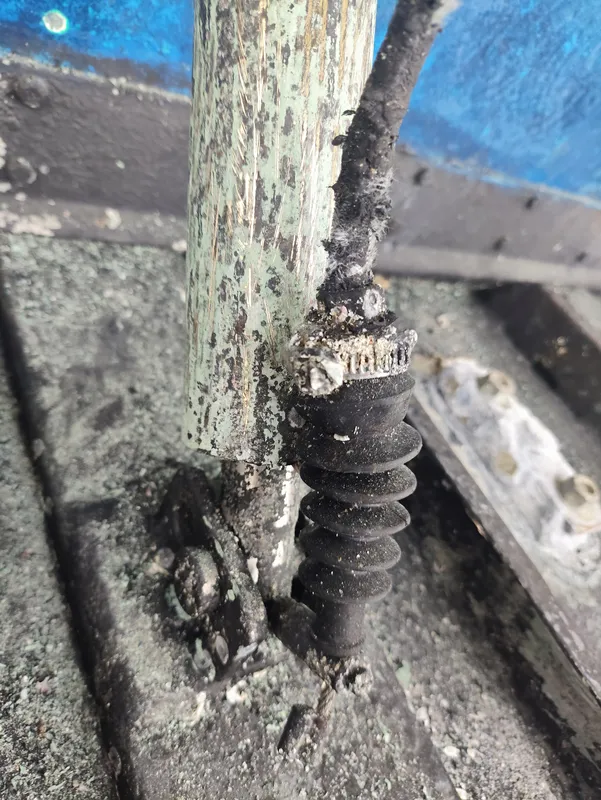
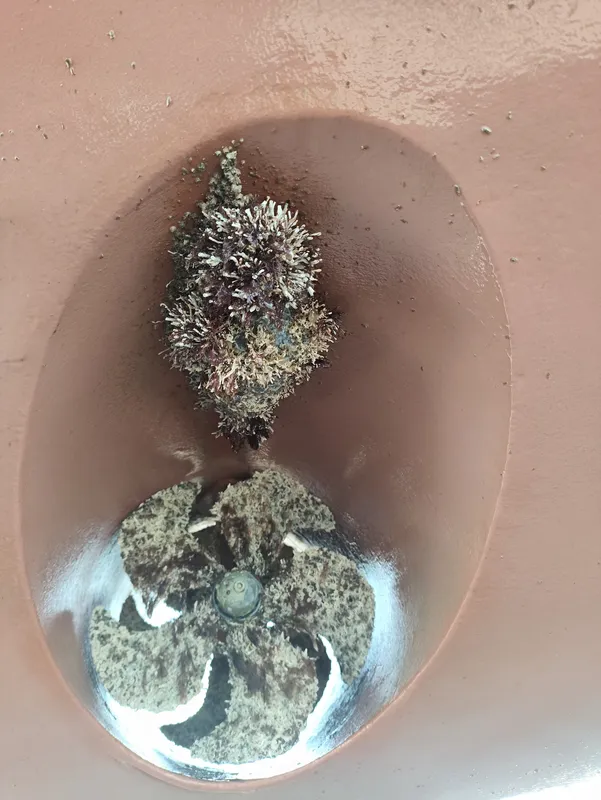
- •Shaft line: struts and rubber cutlass bearings with no play, straight shafts and propellers free of corrosion. The sacrificial anodes are heavily worn, which confirms they are doing their job; the stern thruster anode is calcified and needs replacing.
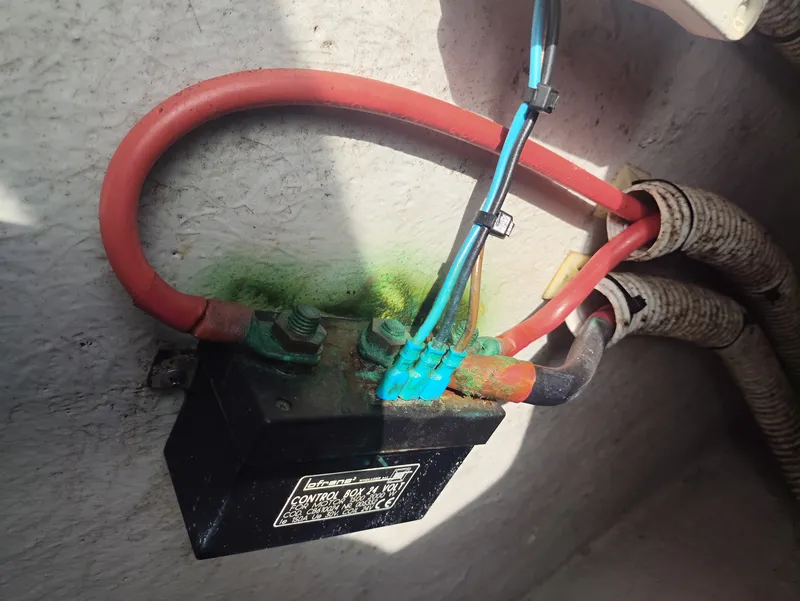
- •Windlass control relay with advanced corrosion and verdigris on the motor terminals. It is the only priority safety item: if it fails when anchoring in an emergency, the boat loses manoeuvrability.
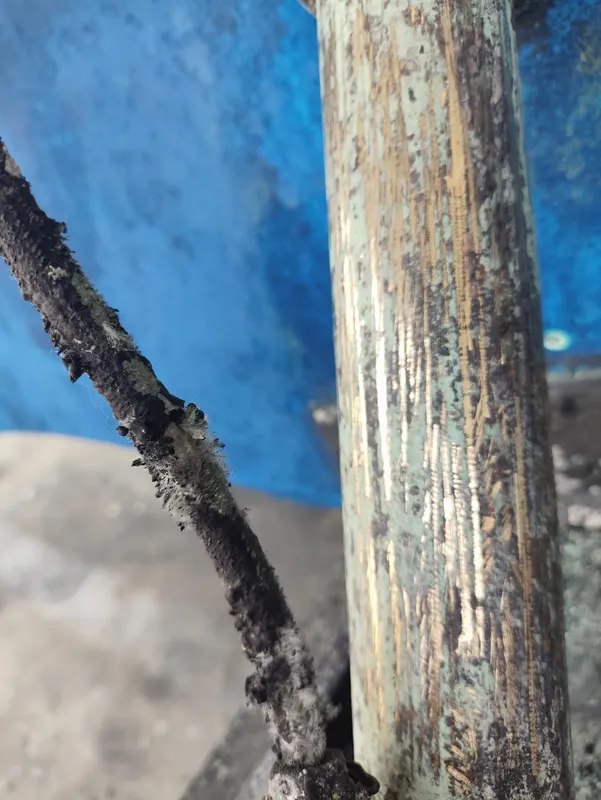
- •Straight, symmetrical crack at both underwater exhaust outlets, one per engine. It is sealed with epoxy and glass at the next haul-out and does not affect current seaworthiness.
- •Trim tabs: steel tensioning cable, sheath and clamp deteriorated, mainly on the starboard side. The up/down system needs replacing; it affects trim and comfort, not structure.
How we helped the buyer
- We separated the urgent item (the relay, ~€800 including the windlass repair) from what can be scheduled.
- Osmosis in two scenarios: local blister repair (~€2,500) or full guaranteed treatment (€12,000-18,000). The readings supported the first option.
- Indicative total of ~€17,500 to take into the negotiation.
Photos from the report




 March 2026 · Maresme (Barcelona)
13 m offshore cruising sailboat, 1989
Buy, fixing the critical items first€8,700-9,700 of negotiating arguments
13 m offshore cruising sailboat, 1989
A 1,850-hour engine steady at 80 °C from 1,800 to 3,000 rpm, alternator charging 55 A and SWR 1.1 on the VHF antenna. Against that: 37-year-old rigging (service life 10-15 years), five corroded seacocks and expired safety gear.
Inspection: Hauled out plus sea trial
What we found
- •Original 1989 standing rigging and chainplates: 37 years against a stainless steel service life of 10-15. Fatigue and internal cracks cannot be seen from outside, and a mast over 10 years old is not insurable under standard policies.
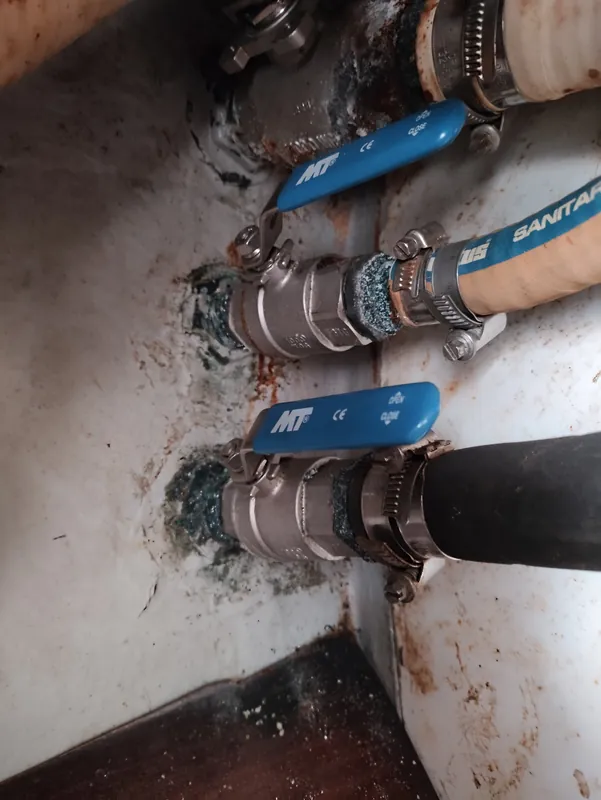
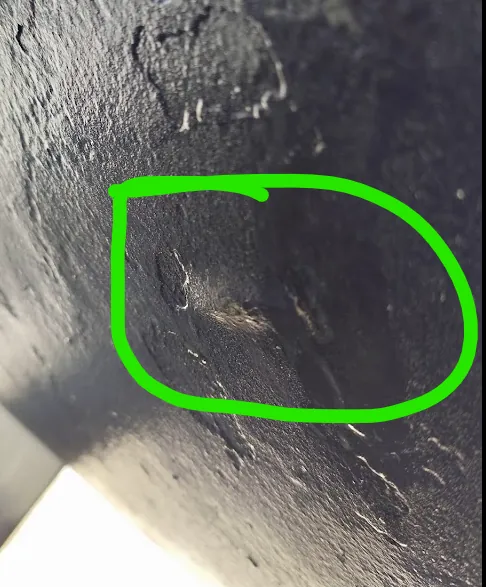
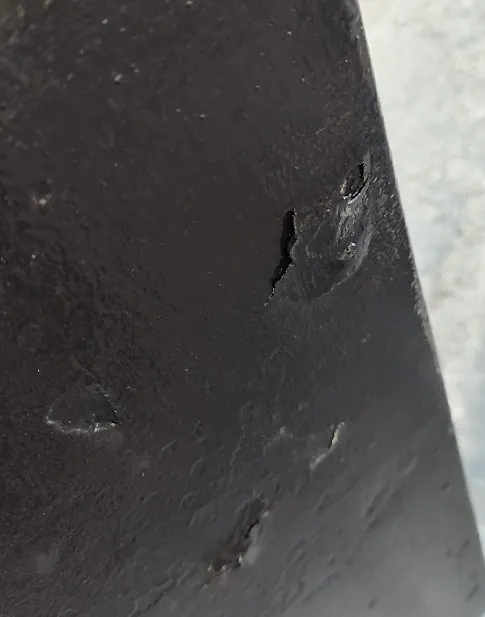
- •At least 5 seacocks with galvanic corrosion (service life 10-15 years, here 37) and rubber hoses of 5-10 years' life already stiff and crystallised. The risk is a snapped handle or sudden flooding.
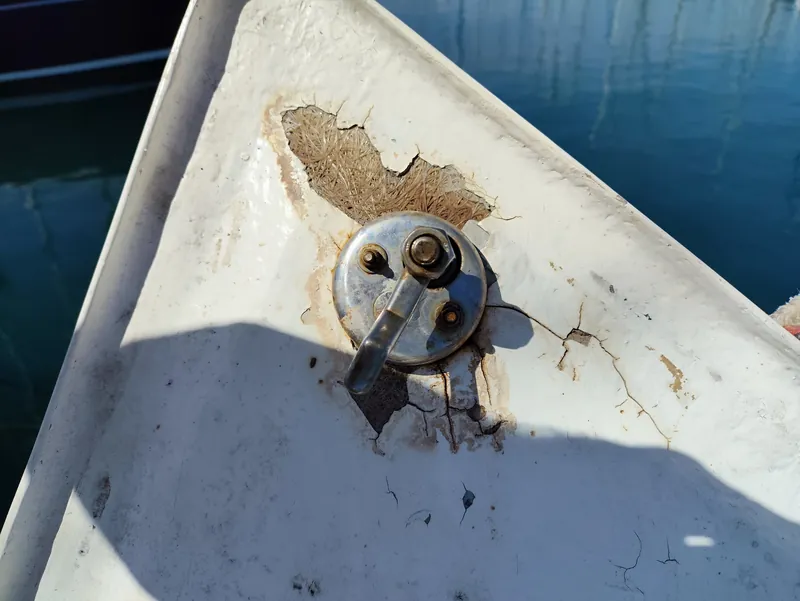
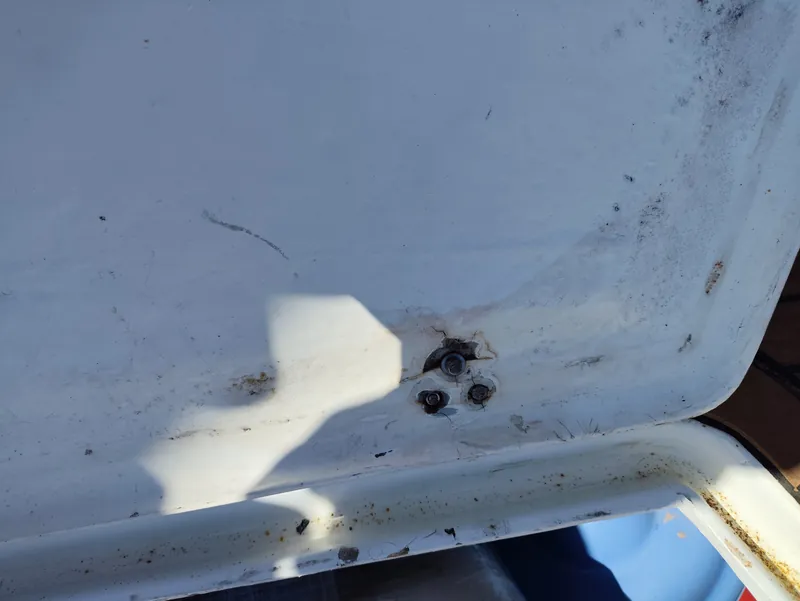
- •Fore hatch needing urgent attention: hinges, fixings and latches in very poor condition, with broken gelcoat and bare fibre showing. It must be repaired now to keep it watertight.
- •75 hp diesel with 1,850 hours on the sea trial: 4.7 knots at 1,800 rpm, 6.5 at 2,000 and 7.2 at 3,000, always at 80 °C with clear exhaust. No vibration between 800 and 3,000 rpm; oil with no emulsion or metal particles. Starting takes 5-6 s, so the glow-plug preheating needs checking. The alternator puts 55 A into the battery bank (installed in 2025); the 37-year-old original wiring calls for a fuse audit.
- •Professional SWR and power meter on the VHF: SWR 1.1 at 20 W, antenna and mast cable in excellent condition. The Class B AIS receives targets at 20 nautical miles and transmits correctly, checked with an external app.
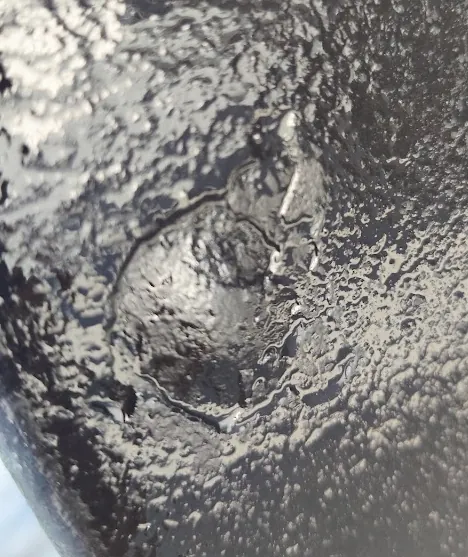
- •Early osmosis: 3 blisters of 18-20 mm on the rudder and 1 on the side, with fluid under pressure and a vinegar smell when pierced. The underwater hull carries many old antifouling layers that are flaking off. The moisture meter reads a uniform 30-31 % over the whole hull and the tap test finds no delamination.
How we helped the buyer
- Negotiation focused on three items: rigging and chainplates (€6,000-7,000), seacocks (~€1,200) and safety gear (~€1,500).
- We told the buyer what was not worth arguing about (cosmetics, hull) so the deal would not fall apart over details.
- Post-purchase roadmap: rigger, haul-out for the seacocks and official liferaft and EPIRB service.
Photos from the report
 May 2026 · Girona area (on its trailer)
5 m open boat with a 75 hp outboard, 2004
Buy at a discount€1,000-1,500 justified discount
5 m open boat with a 75 hp outboard, 2004
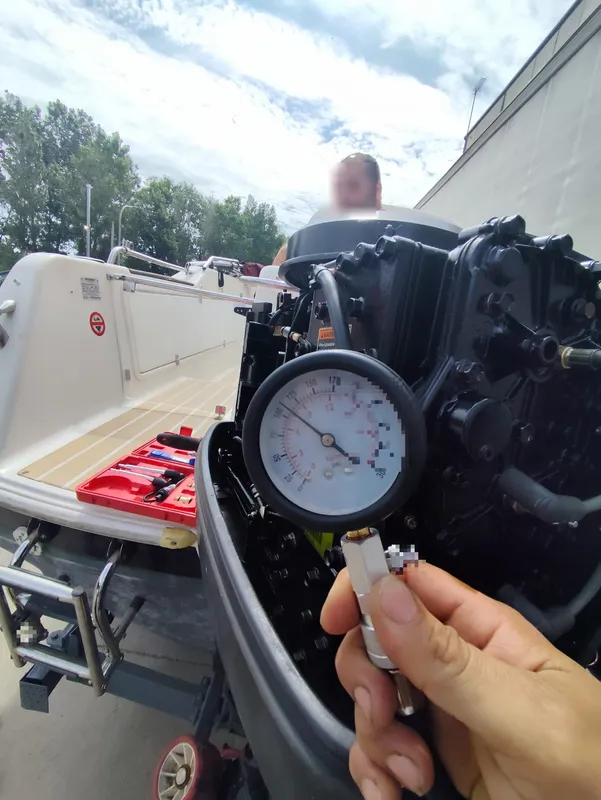
Compression of about 120 PSI in all three outboard cylinders (125 factory, under 5 apart) and a hull at 8-10 % moisture below the waterline: sound mechanics and hull. The bilge pump, lights and registry entry fail.
Inspection: On land, with engine start-up
What we found
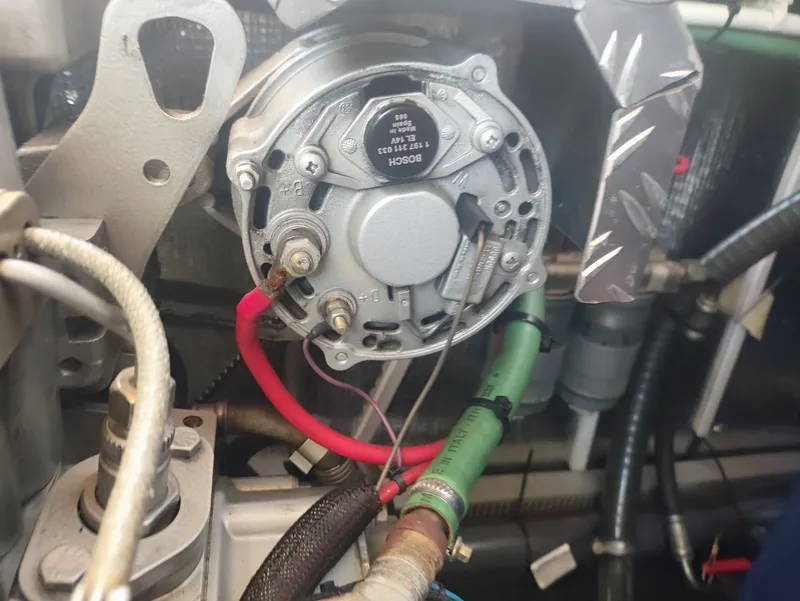
- •Compression test on all three cylinders: about 120 PSI each, against 125 factory. The spread between cylinders is under 5 PSI, which rules out uneven wear of pistons, rings or valves.
- •Contact moisture meter: 2 % on the topsides and a uniform 8-10 % below the waterline, at six points per side. No osmosis or delamination; a hammer tap test finds none either.
- •Starts first time, minimal vibration and a strong, steady telltale stream. Light white smoke when cold, clearing to transparent in a few seconds; no blue or black smoke.
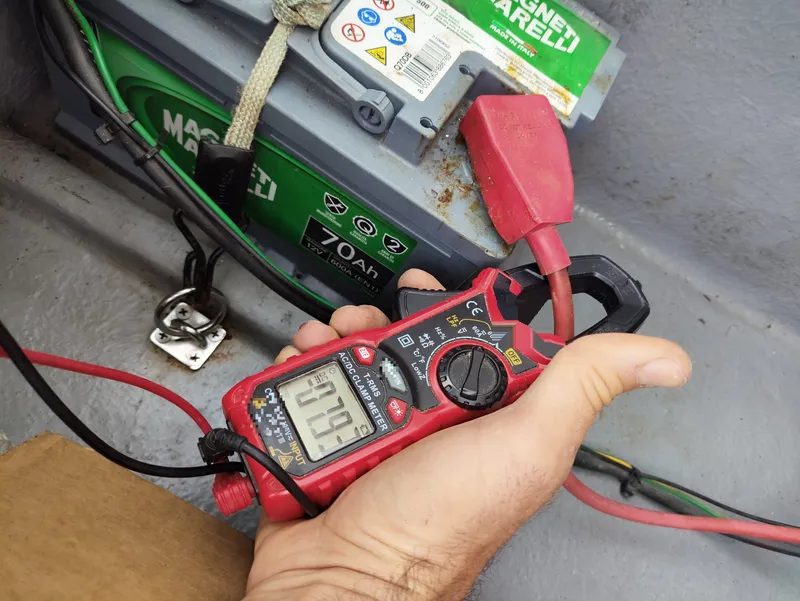
- •Charging: the clamp meter reads 8 A with the engine running. The starter battery is over 5 years old and must be replaced before the first outing.
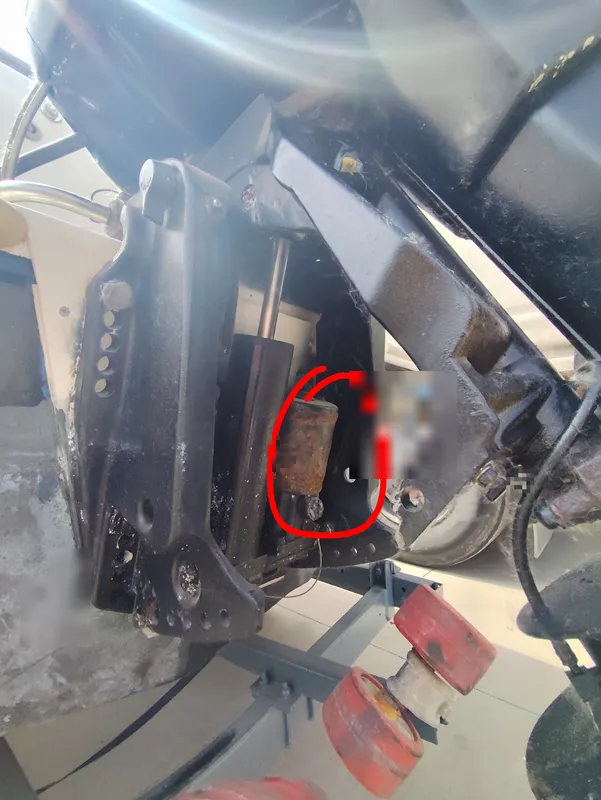
- •Water pump impeller with hardened vanes and limescale in the housing: replaced during the inspection. Zinc anodes with good wear; corrosion on the trim ram and on the lower engine bracket, which need treating.
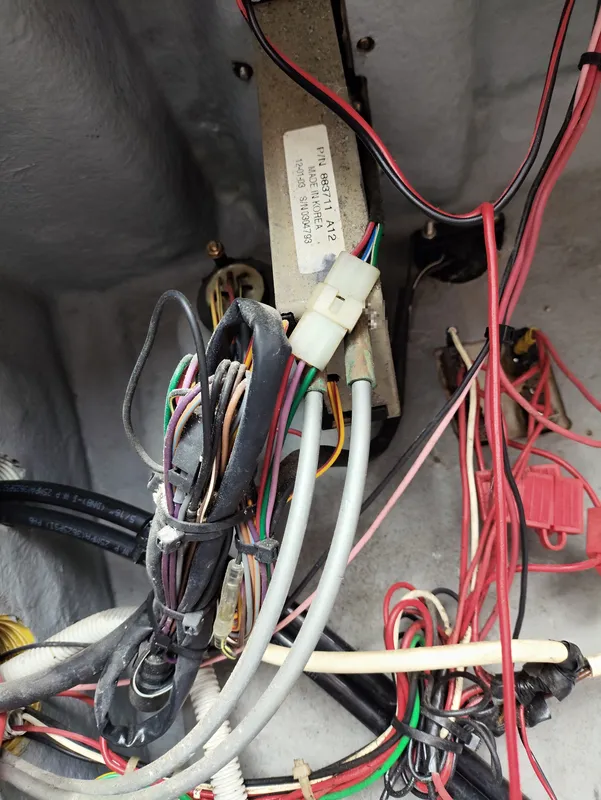
- •Safety and papers: bilge pump in poor condition with a dead float switch, navigation lights not working, and a registry entry of 50 hp when the engine is 75 hp, with the same serial number.
How we helped the buyer
- A costed must-do list before the first outing: bilge pump (€50-80), battery (~€70), lights (€100-250).
- Ask the seller to correct the engine registration or deduct it.
- A justified discount of €1,000-1,500 on the asking price.
Photos from the report
 July 2026 · Terres de l'Ebre (Tarragona)
Dutch 38 ft steel motor yacht with flybridge, 2001
A good buy (90/100)No critical defects
Dutch 38 ft steel motor yacht with flybridge, 2001
A 159 hp diesel with 4,588 hours, tested at 1,500 rpm (80 °C) and for 5 minutes at 2,000 rpm: correct oil pressure, clean exhaust and no vibration. Steel hull with defect-free welds and active anodes.
Inspection: Hauled out plus engine trial
What we found
- •Sea trial: engine at 80 °C and 1,500 rpm (cruising, about 4 l/h according to the owner) and 5 minutes at 2,000 rpm for 7-8 knots. Correct oil pressure, clear exhaust and no vibration.
- •4,588-hour engine with freshly changed, clean oil, pink and uncontaminated gearbox oil, dry sump gasket and corrosion-free alternator (Bosch) connections. Engine mounts in good condition. The Whisper generator was started and tested: it runs very well with hardly any vibration (243 V, 3,060 rpm, 51.0 Hz).
- •2-year-old AGM batteries: 12.56 V on the starting battery at rest and 13.14 V on the house bank while charging; the charge panel showed 14.06 V and 3.7 A. The battery bank fuses could not be located (category B).
- •Welds checked visually across the whole underwater hull: no cracks, porosity, undercut or lack of fusion. No galvanic corrosion, and the anodes had continuity to the hull (tested with a multimeter) and visible wear after one month: the cathodic protection is working. The rudder blade has no play and shows no apparent corrosion.
- •Fixed VHF antenna with an SWR of about 2 at 25 W output: acceptable. No DSC and no AIS.
- •Before sailing: repair the masthead light (not working) and fit automatic float switches to the bilge pumps. Bow and stern thruster propellers are fouled: use a specific antifouling coating at the next haul-out.
How we helped the buyer
- We confirmed, with data, that it was a good buy, so the client could decide with peace of mind.
- A phased upgrade plan: DSC VHF, AIS, radar and a plotter on the flybridge.
- Preventive maintenance ranked by category, without alarmism.
Photos from the report
When the boat is too far away
If the boat is a long way from us, you or someone you trust go to see it and the Altair remote inspection app guides you step by step. We review everything remotely and send you the report.
- 1You go to the boat
- 2The app tells you what to check, photograph and film
- 3We review it and you get the report
- It gives you an idea of the condition of the boat before going further.
- It costs less: no surveyor's travel, expenses or travel time to pay.
- What you paid is deducted if you then book the on-site survey.
- Up to 8 m
- €190 + VAT
- 8 to 12 m
- €250 + VAT
- 12 to 15 m
- €320 + VAT
- 15 to 18 m
- €520 + VAT
- 18 to 24 m
- €620 + VAT
It is not the best option, far from it
The client films it: we do not touch or try the boat in person and moisture is not measured with a hygrometer, so something may slip past us. It is a solution when a trip by the surveyor is not worth it, not a substitute for an on-site survey.
A real remote inspection
 October 2026 · Seville (over 800 km from us)
8.30 m lifting-keel sailboat, 2004
Sound, but with age-related work pending22-year-old diaphragm (Yanmar: 6 years max)
8.30 m lifting-keel sailboat, 2004
A clean Yanmar engine with up-to-date servicing, but a saildrive diaphragm with no documented replacement (22 years; Yanmar says 6 at most), corroded 2004 rigging, and rust with cracked filler on the keel bulb.
Inspection: Remote: the buyer photographed and filmed the boat ashore, guided by the Altair remote inspection app
What we found
- •SD20 saildrive: there is no record the inner diaphragm (double membrane with an R. SEAL sensor) was ever replaced: 22 years against the manufacturer's 6 at most. It looked dry from inside, but crumbled sound-insulation foam lay around the base.
- •Yanmar 2GM20C engine (11.8 kW at 3,400 rpm, engine number matching the registry): clean, with oil, belts and impeller changed in 2025 and the filter in 2026. It could not be started; the hour meter is stopped at 692 h.
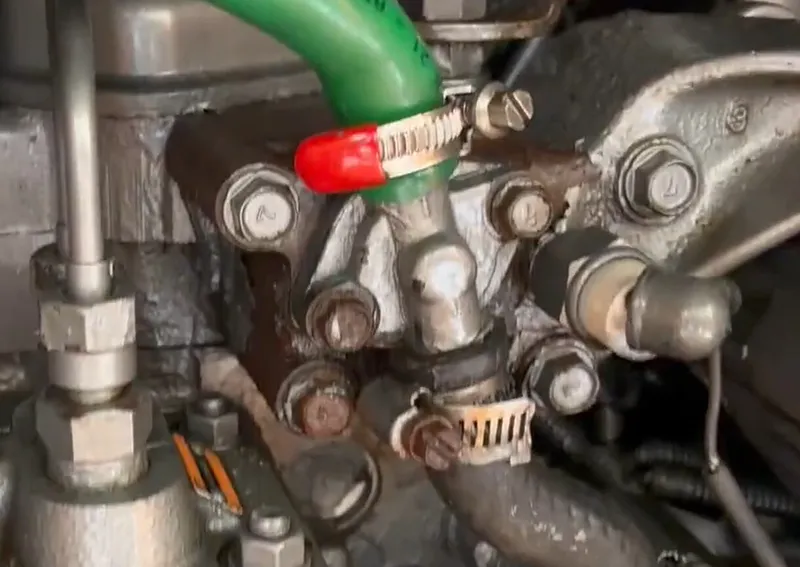
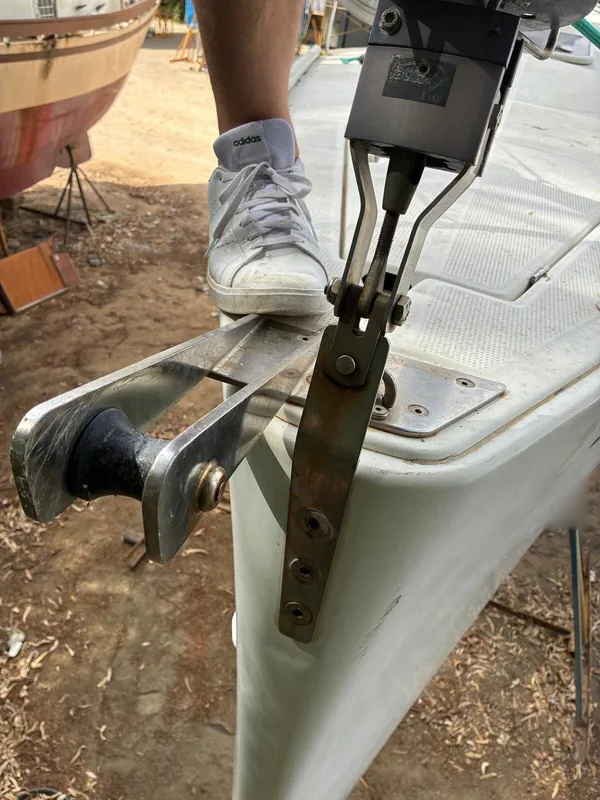
- •Original engine mounts with advanced rust on the rear bracket. Once the rubber hardens, vibration damages the saildrive seal: replace them together with the diaphragm. Rusty bolts also on a cooling-circuit housing.
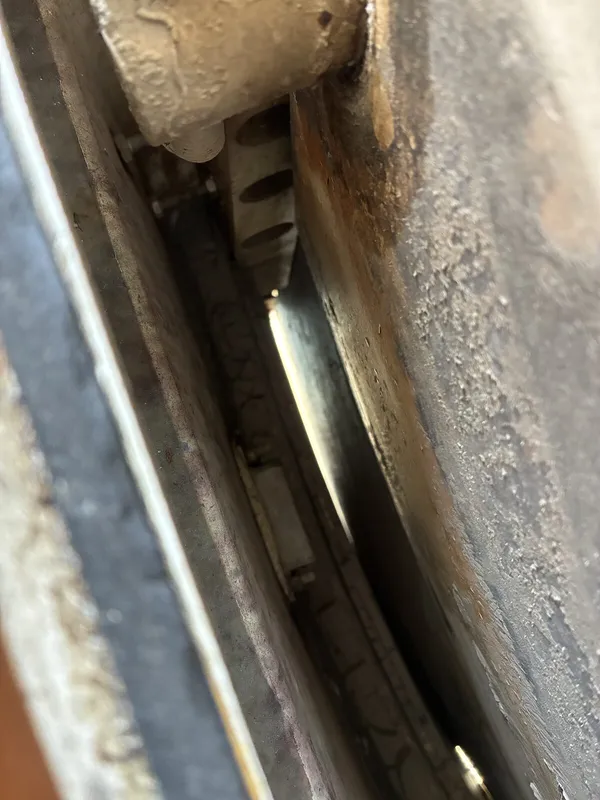
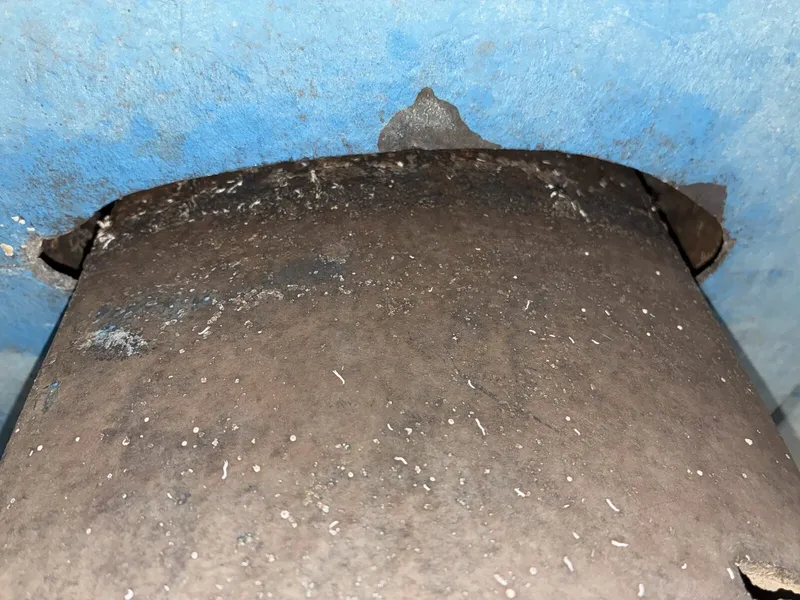
- •Lifting keel: bulb with widespread surface rust and cracked filler at the joint with the blade, which could be hiding a crack or weld corrosion. In the case, rust flakes and loose debris at the head, with lifting paint in the slot and worn guides. The hydraulic circuit builds pressure, but the full travel was not seen.
- •Original 2004 standing rigging (22 years; ten is the usual replacement age): turnbuckles with verdigris and corrosion where the wire enters the swages, with possible broken strands. Without an invoice under 10 years old, comprehensive insurance does not cover a dismasting.
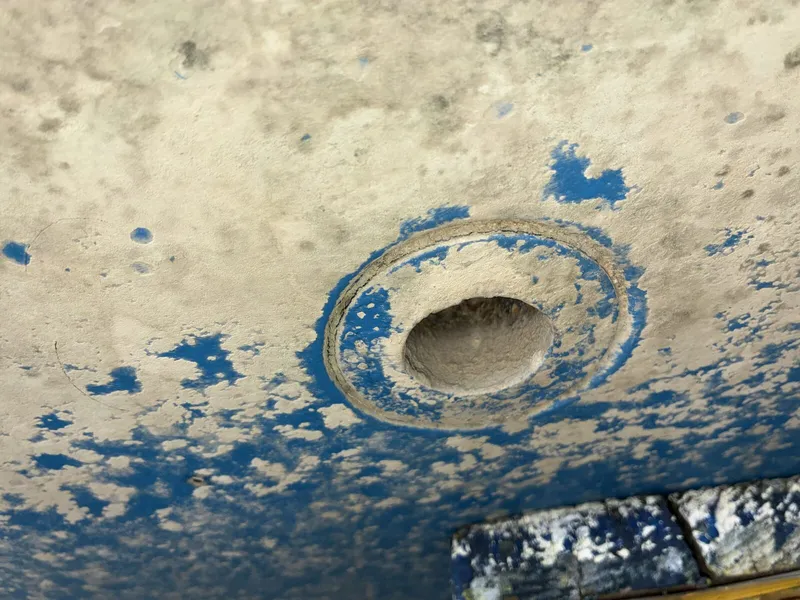
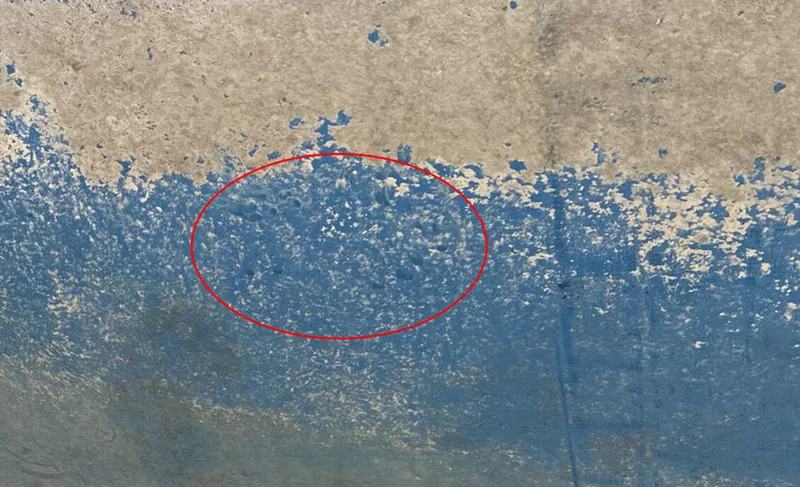
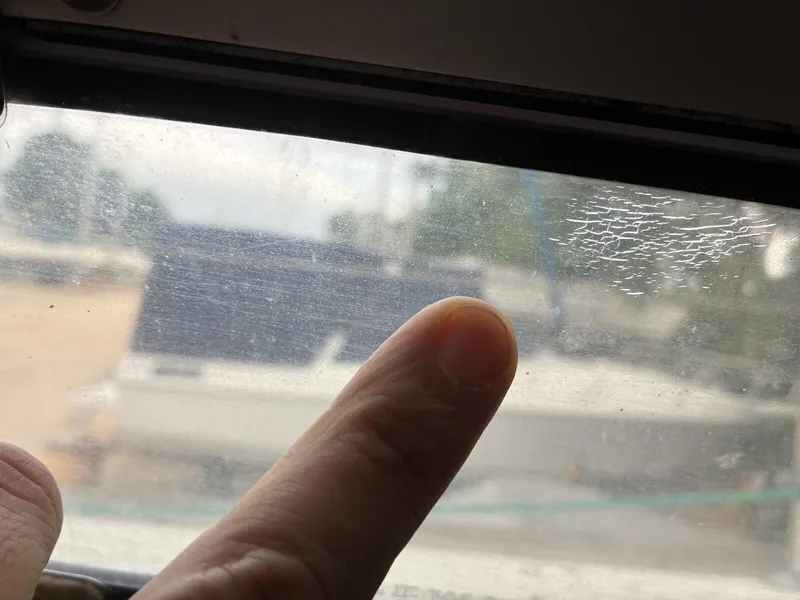
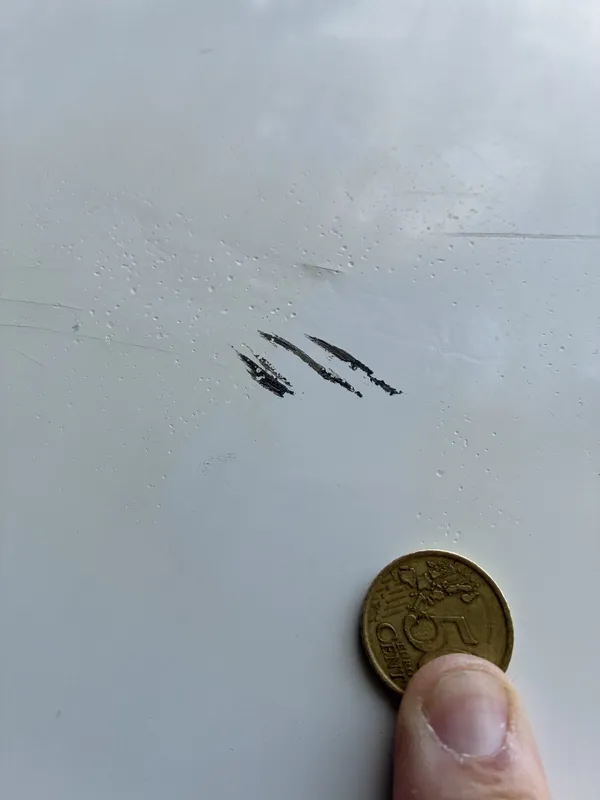
- •Underwater hull and exterior: blue antifouling lifting in patches over old layers (sand and repaint before launching), through-hulls with old sealant and rings (replace if original) and hatch acrylic crazed from side to side and scratched (replace before sailing). Tapping the topsides gives a clear ring, with no delamination; the bottom, keel and saildrive were not tapped.
How we helped the buyer
- A report built on the buyer's photos and videos, ranked by urgency: what not to use, what to do before sailing and what can wait.
- Missing paperwork to request before signing: the latest safety inspection, current insurance and a certificate of no charges.
- A list of checks that can only be done afloat (engine, keel, saildrive, sea trial), to do before agreeing the price.
Photos from the report


Who does it
Who carries out the survey
Altair's pre-purchase inspections are conducted by Ricard Prehn, an industrial technical engineer with more than 27 years of real experience in the nautical sector. Unlike other inspectors, Ricard is regularly involved in the direct repair and maintenance of vessels.
His 'on-board' experience ranges from changing seacocks and epoxy fiber lamination to structural osmosis repairs, technical rigging renewal, electronics, and battery systems. Náutica Altair (Ricardo Prehn) is authorised by the Directorate General of the Merchant Marine (Reg. 5/2024) to carry out installation, repair and maintenance services for all radioelectric and radio-navigation equipment.
«I know where to look because I also repair these same components. I work so you can buy with total peace of mind.»
- Independent surveyor: no brokers or sellers
- Hands-on experience repairing boats
- Sailboats, motorboats and yachts up to 24 m
- Installer authorised by the Spanish Merchant Navy
- Clear reports and honest advice
Where and when
Where do we perform pre-purchase inspections?
We travel to marinas, harbors, and shipyards throughout Catalonia and Spain. We regularly work in Port Ginesta, Port Olímpic, Marina Badalona, Port Garraf, Marina Port Vell, Vilanova i la Geltrú, Palamós, Roses, Tarragona, and Valencia. We also perform inspections in the Balearic Islands, France, Italy, and the rest of Europe (subject to travel and stay expenses).
Catalonia, Spain and the rest of Europe
When to request a pre-purchase inspection?
The best time to perform it is before purchasing a second-hand boat and, above all, before signing the final contract. Once potential faults or hidden defects are detected, you will have solid arguments to negotiate the price or withdraw from the purchase with total security.
FAQ
Frequently asked questions about boat surveys
What do we do at Altair during a pre-purchase inspection?
We perform a complete technical evaluation of the condition of the boat. We inspect the hull, structure, engine, electrical installations, safety, and equipment, providing you with an independent report so you can decide with total security.
Is a pre-purchase inspection mandatory?
It is not legally mandatory, but it is highly recommended. A pre-purchase inspection can detect hidden problems that are not appreciated during a normal visit and avoid significant expenses after the purchase of the boat.
What is the difference between an official appraisal and a pre-purchase inspection?
While a judicial or insurance appraisal requires specific certifications for legal processes, the pre-purchase inspection is a commercial technical analysis performed by experts to protect the buyer's investment.
Can a pre-purchase inspection be done on a used sailboat?
Yes, and it is especially recommended. In used sailboats, it is common to find structural wear, rigging problems, osmosis, or old installations that only a professional analysis can detect.
How much does a pre-purchase boat inspection cost?
It is priced by length, with the written report included: up to 12 m, €550 + VAT; 12 to 15 m, €750; 15 to 18 m, €950; 18 to 24 m, €1,300 (+ VAT); over 24 m, on request. Travel is charged at €0.40 per kilometre from Port Garraf.
How do you check areas you cannot see, such as chainplates?
With an endoscope camera: a small camera on a flexible cable that goes through gaps and access hatches. I use it to see chainplates hidden behind linings or furniture and other spots the eye cannot reach, without taking anything apart.
Does the pre-purchase inspection include a sea trial?
Yes, the sea trial is fundamental to evaluate the real behavior of the engine, vibrations, and maneuverability. For precise moisture measurements with a hygrometer, the ideal is for the boat to be 2 days in the shipyard. Shipyard costs are not included.
Can I use the report to negotiate the price of the boat?
Yes. The technical pre-purchase inspection report is a key tool for renegotiating the price or demanding repairs before closing the purchase.
Further reading
Don't make decisions blindly
A professional inspection is a minimal investment compared to the cost of a bad purchase. Contact us and tell us which boat you are considering.