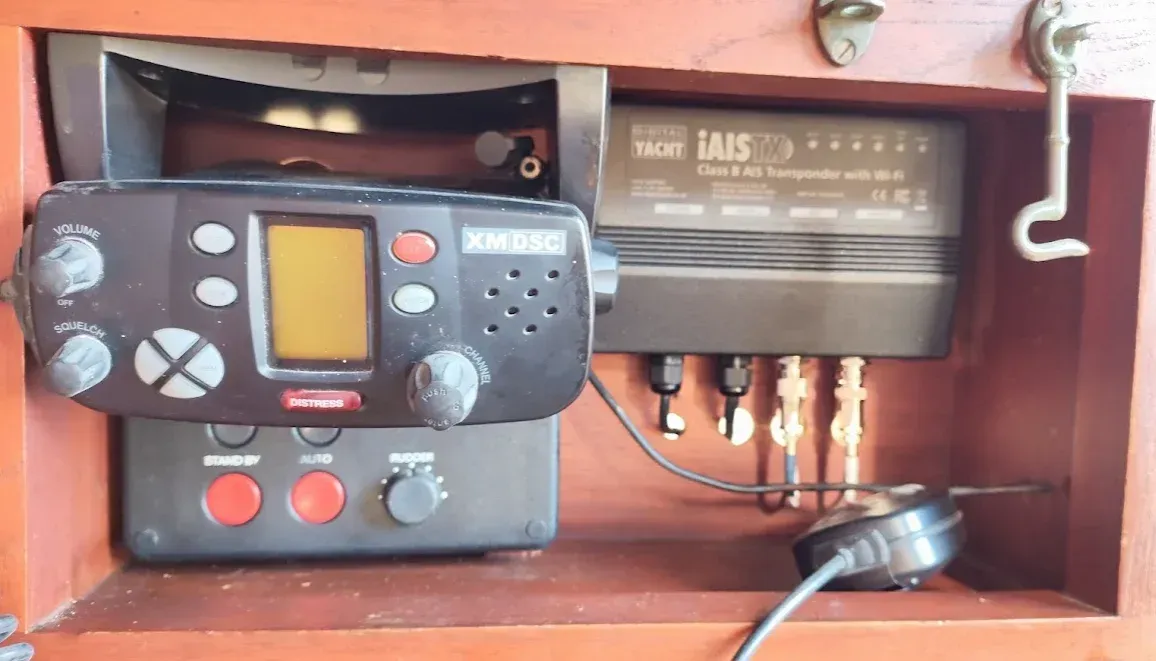
In a serious emergency, the VHF radio is your lifeline. 🆘 The “Mayday” call is the international distress procedure. If you use it, Salvamento Marítimo (the Spanish coastguard) and every boat nearby will come to your aid. You need to know when and how to use this sacred word. 📻
The hierarchy of calls (when to use each)
- MAYDAY (distress): grave and imminent danger (taking on water, fire, abandoning ship).
- PAN-PAN (urgency): serious but not imminent danger (engine failure without drifting into danger, severe seasickness, loss of steering).
- SÉCURITÉ (safety): an important safety message (hazard to navigation, change to lights, strong weather warning).
The MAYDAY procedure (on channel 16)
- “MAYDAY, MAYDAY, MAYDAY”
- “This is (boat’s name 3 times and call sign)”
- “POSITION” (exact coordinates or bearing and distance from a known landmark).
- “NATURE OF DISTRESS” (taking on water, fire, etc.).
- “ASSISTANCE REQUIRED” (tow, medical help, etc.).
DSC (digital selective calling)
On many modern radios, all you have to do is lift the cover and press the DSC button. This automatically sends a distress alert to nearby boats and coast stations. For the alert to carry your position and identify you, the radio must have the boat’s MMSI programmed and be connected to a GPS. Check it before you go: without that, the alert goes out, but incomplete.
NAVTEX: the warnings that arrive on their own
As well as talking on the VHF, the boat can receive the warnings for its area in writing (unlit buoys, drifting objects, storms) with a NAVTEX receiver. We explain it, with today’s real navigational warnings live, in what NAVTEX is and how to read it.
Practise on the radio!
Radio use is a compulsory practical session for the PNB and PER. Come and simulate emergencies with us to build your confidence! ⚓ See radio practical sessions