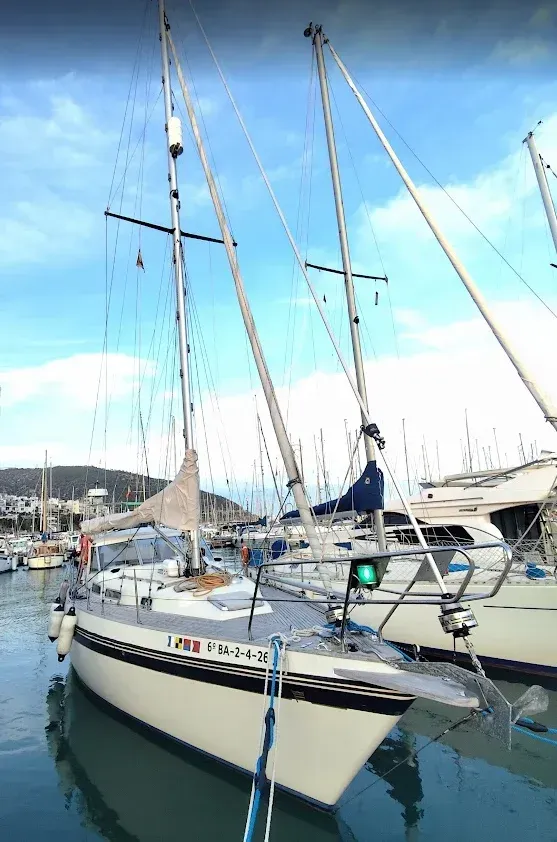
Buying or chartering a sailing boat is not a transaction; it is the start of a relationship. Like any travelling companion, it has to fit your dreams, your experience and your budget. Are you after the adrenaline of racing or quiet sunsets at anchor in a cove? Here we help you decide.

Which sailing boat should you buy to start sailing?
To start with, the best sailing boat is a day sailer under 10 metres: manageable single-handed, with an affordable berth and upkeep. It is the safest starting point whether you buy or charter, and it lets you build up sea miles before stepping up to bigger boats.
Define your sailing plans
It’s the million-dollar question. Be honest with yourself:
-
Family cruising
Priority: Comfort and safety. You want roomy spaces, a generous cockpit and easy handling.
-
Performance sailing
Priority: Performance and speed. Light hulls, more sail area and deep keels.
-
Ocean passages
Priority: Self-sufficiency and strength. Large tanks, solid build and gear for long stays aboard.
-
Day sailer
Priority: Simplicity and fun. Small, nimble boats that are easy to maintain, for short outings.
Length: does size matter?
Absolutely, but “bigger is better” doesn’t always hold.
- Under 10 metres: manageable single-handed, affordable berths and accessible upkeep. Ideal for getting started.
- 10 to 14 metres: the sweet spot. Excellent accommodation for families and decent offshore capability, but costs start to climb.
- Over 15 metres: luxury and space, but they need an experienced (or hired) crew and complex systems.
New or second-hand
A new boat gives you warranties and customisation (that “new boat smell”), but the initial depreciation is steep. The second-hand market is an ocean of opportunities where, with a good survey, you can find well-equipped gems for a fraction of the price.
The expert’s advice
“Don’t buy the boat for the round-the-world trip you’ll make in 10 years’ time. Buy the boat you’ll enjoy this weekend. The best sailing boat is the one that leaves the harbour, not the one that stays tied up.”
At Altair we don’t just teach you to sail; we advise you on your first steps as a boat owner. Any questions? Talk to Ricard.
Before you sign, get a pre-purchase inspection
The second-hand market hides defects you can’t see at first glance: osmosis, tired rigging, poor electrical installations. A professional pre-purchase inspection includes a sea trial and a written report — and it can save you thousands of euros in repairs or give you the perfect argument to negotiate the price.
Request a pre-purchase inspection