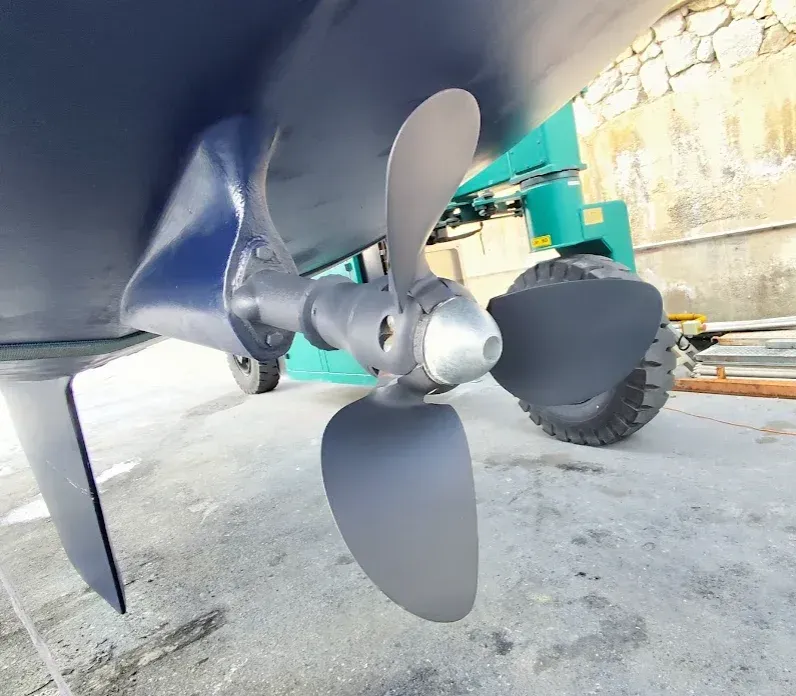
Ever noticed that when you put the engine in reverse your boat tends to swing to one side? 🤔 That’s “prop walk”, or the “paddle-wheel effect”. It’s a turning force that, once you understand it, becomes your best ally for docking and leaving the berth. Here’s the secret experienced skippers know! 💡
The phenomenon (propeller pitch)
- Most leisure inboard engines have right-handed propellers (seen from astern).
- Going ahead: the boat goes straight, though with a slight tendency to veer to starboard.
- Going astern: prop walk pushes the stern to port (with right-handed propellers).
How to use it to your advantage
- If your berth is on the starboard (right-hand) side of the pontoon, you’ll find it harder to bring the stern in.
- If your berth is to port (left), prop walk in reverse helps you swing the stern towards the quay with hardly any rudder.
Manoeuvring tip
When you need to move the stern quickly, use short, decisive bursts astern! The effect is immediate and you don’t need to pick up speed.
Feel the effect!
Practice is the only way to feel prop walk. We teach it on our training boats! ⚓ See motor practical sessions